
Search
Remove Ads
Advertisement
Search Results
Image
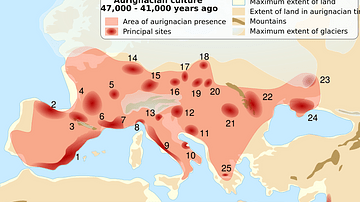
Aurignacian Sites
Map showing sites and presence associated with the Aurignacian culture, usually attributed to the first modern humans who arrived in Europe around 45,000 years ago.
Image
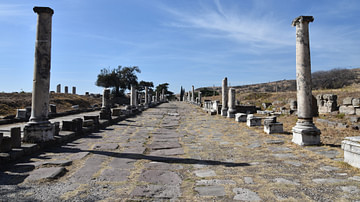
Sacred Way, Asklepieion of Pergamon
The connection between Pergamon city and the sacred area of Asklepieion was provided through a sacred road of 1 km built during the Roman Empire period. The sacred road had arches and was covered with vaults.

Article
Early Explorers of the Maya Civilization: John Lloyd Stephens and Frederick Catherwood
The names of John Lloyd Stephens and Frederick Catherwood are forever linked to the Maya and Mayan studies as the two great explorers who documented the ruins from Copan...
Article
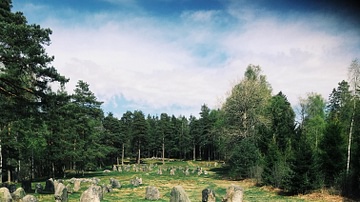
Exploring Norways' Forgotten Stone Circles & Petroglyphs
Right outside the cities of Fredrikstad and Sarpsborg in South-East Norway, there are two archaeological, intriguing and beautiful sites, the Hunnfelt, a monument consisting of several stone circles...
Image
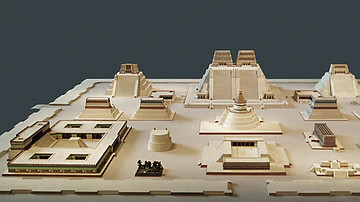
Sacred Precinct, Tenochtitlan
A model reconstruction of the sacred precinct of Tenochtitlan, the Aztec capital on Lake Texcoco. The city was founded in 1345 CE and fell to the Spanish forces led by Cortés in 1521 CE. The sacred complex was dominated...
Image
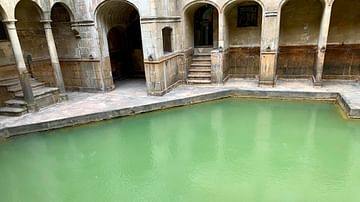
Roman Sacred Spring
The hot water- sacred spring at Aquae Sulis, now Bath. The goddess Sulis Minerva was seen as the embodiment of the sacred water in the Roman era (1st- early 5th century CE).

Definition
Inca Religion
For the Incas, as with many other ancient cultures, religion was inseparable from politics, history, and society in general. All facets of community life were closely connected to religious beliefs, from marriages to agriculture...

Image
Sacred Pawnee Site of Pahuk
Pahuk (also known as Pahaku and Pahuk Hill) a site sacred to the Pawnee in modern-day Nebraska. The site features prominently in the Pawnee tale The Boy Who Was Sacrificed and in the story of Old-Lady-Grieves-the-Enemy...
Image
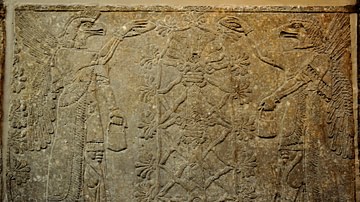
Eagle-Headed Apkallus Flanking the Sacred Tree
Alabaster bas-relief of eagle-headed Apkallus flanking the sacred tree. Neo-Assyrian Period, 865-860 BCE. Room I, the North-West Palace at Nimrud, modern-day Iraq. (The British Museum, London)
Image
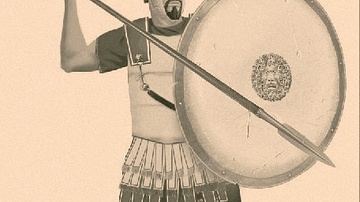
Carthaginian Sacred Band Hoplite
A Carthaginian hoplite from the Sacred Band, the army corps composed of Carthaginian citizens. Taken from a coin of Syracuse, 4th century BCE.
