
Search
Remove Ads
Advertisement
Search Results
Image
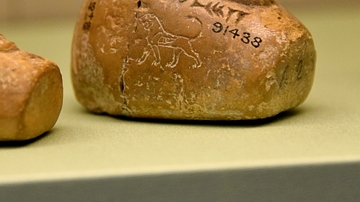
Royal Duck-shaped Weight from Nimrud
The lion engraved on this duck-shaped weight shows that this is an official palace weight and therefore a royal property. Neo-Assyrian Period, 800-700 BCE. From the North-West Palace at Nimrud, Northern Mesopotamia...

Video
The Pawnee Seed Preservation Society Revive Ancient Ties to Ancestors | Seed Warriors | PBS
Official website: https://to.pbs.org/3BtRjWU In Seed Warriors, filmmaker Rebekka Schlichting follows a group of seed keepers as they work to regain food sovereignty...

Video
White Buffalo Calf Women's Society Offers Shelter
Stay informed about South Dakota news, weather, and sports Follow KELOLAND News on our website and social channels: https://www.keloland.com/ https://www.youtube.com/user/kelolandnews https://www.facebook.com/keloland/...

Image
Family Tree of the Royal House of Stuart 1603-1714 - Britain’s Royal Dynasty
Rulers of Scotland from 1371 and of England and Ireland from 1603, the House of Stuart presided over an era of dynastic union, religious conflict, civil war, regicide, and eventual...
Image
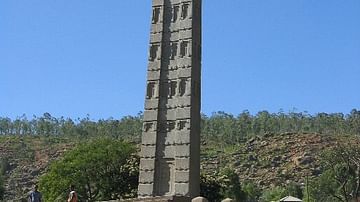
Royal Obelisk, Axum
A stone monolithic obelisk marking the tomb of King Ezanas of the kingdom of Axum (aka Aksum, modern Ethiopia), c. 400 CE. The carvings imitate the architectural features of dry-stone and timber housing.

Image
Achaemenid Royal Tombs
Tombs of the Achaemenid kings of Darius I, Xerxes I and Artaxerxes I at Naqsh-e Rostam.
Image
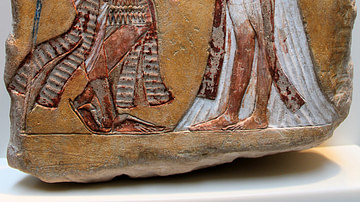
Royal Couple
Painted limestone relief, possibly depicting Akhenaten and Nefertiti, from Amarna, 18th Dynasty, c. 1335 BCE.
Neues Museum, Berlin.
Image
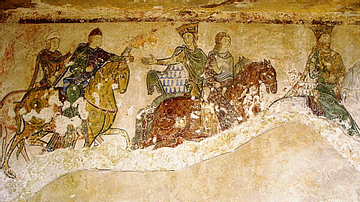
Royal Hunt Fresco, Chapelle Sainte-Radegonde
A fresco from the Chapelle Sainte-Radegonde, thought to depict Henry II of England (1154 - 1189 CE), Eleanor of Aquitane (r. 1137 - 1204 CE), and their children. The fresco may also depict Henry the Young...
Image
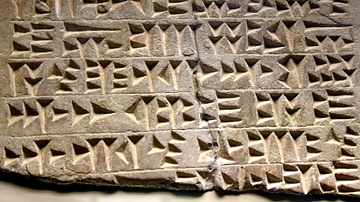
Fragmentary Urartian Royal Inscription
This is a dedication to the god Haldi, the supreme god of the Urartians, from a temple built by Menua, son of Ishpuini, king of Urartu (reigned 810-786 BCE). It is written in Urartian cuneiform writing. From...
Image
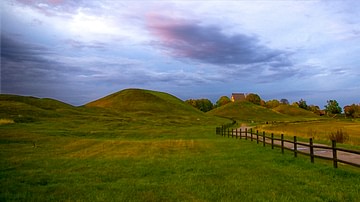
Gamla Uppsala, Royal Mounds
Burial mounds at Gamla Uppsala, Sweden. Legend has it that three Norse gods - Odin, Thor, and Freyr - were buried under each and the site where the Temple of Uppsala once stood was sacred to them. Excavations of the mounds...
