
Search
Remove Ads
Advertisement
Search Results
Definition
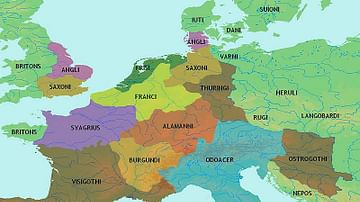
Alemanni
The Alemanni (also known as the Alamanni and the Alamans, meaning "All Men" or "Men United") were a confederacy of Germanic-speaking people who occupied the regions south of the Main and east of the Rhine rivers in present-day Germany...
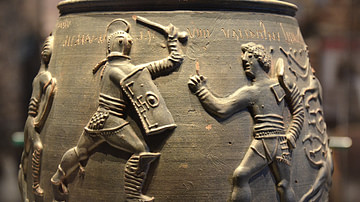
Image Gallery
25 Images of Roman Gladiators
This gallery features images of Roman gladiators. In ancient Rome, gladiators were professional combatants who entertained audiences in the Roman Republic and Roman Empire by violently confronting other gladiators and...

Video
Marriage in the Ancient Roman Empire
Love, sex, and marriage in ancient Rome were defined by the patriarchy. The head of the household was the father (the pater familias) who had complete control over the lives of his wife, children, and slaves. This...

Video
History of Dogs in Ancient Roman Society and Mythology
Dogs were highly valued in ancient Rome, as they were in other cultures, and the Roman dog served many of the same purposes as it did in, say, Egypt and Persia - as hunters, guardians, and companions...

Definition
The Edicts of Ashoka the Great
The Edicts of Ashoka are 33 inscriptions engraved on pillars, large stones, and cave walls by Ashoka the Great (r. 268-232 BCE), the third king of the Mauryan Empire (322-185 BCE) of India. One set, the so-called Major...

Definition
Arsinoe II Philadelphus
Arsinoe II (l. c. 318/311 - c. 270/268 BCE), daughter of Ptolemy I became one of the most enduring figures of the Lagid or Ptolemaic Dynasty and left an undeniable mark in the historical evidence. She was married three times...
Definition
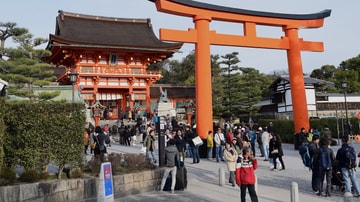
Shinto
Shinto means 'way of the gods' and it is the oldest religion in Japan. Shinto's key concepts include purity, harmony, family respect, and subordination of the individual before the group. The faith has no founder or prophets and there...

Definition
The Medieval Church
Religious practice in medieval Europe (c. 476-1500) was dominated and informed by the Catholic Church. The majority of the population was Christian, and "Christian" at this time meant "Catholic" as there was initially no other...

Definition
Brundisium
Brundisium (modern Brindisi), located on the Adriatic coast of southern Italy, was a Messapian and then Roman town of great strategic importance throughout antiquity. Although architectural remains are sparse, the city has several...

Definition
Shapur II
Shapur II (r. 309-379 CE, also Sapur II) was the tenth monarch of the Sassanian Empire (224-651 CE) and among the most successful. Under his reign – which lasted his entire life – the Avesta (Zoroastrian scripture) was committed to...
