
Search
Did you mean: Helios?
Remove Ads
Advertisement
Search Results

Definition
Fourth Crusade
The Fourth Crusade (1202-1204 CE) was called by Pope Innocent III (r. 1198-1216 CE) to retake Jerusalem from its current Muslim overlords. However, in a bizarre combination of cock-ups, financial constraints, and Venetian trading...

Definition
Third Crusade
The Third Crusade (1189-1192 CE) was launched to retake Jerusalem after its fall to the Muslim leader Saladin in 1187 CE. The Crusade was led by three European monarchs, hence its other name of 'the Kings' Crusade'. The three leaders...

Definition
Dissolution of the Monasteries
The Dissolution of the Monasteries was a policy introduced in 1536 CE by Henry VIII of England (r. 1509-1547 CE) to close down and confiscate the lands and wealth of all monasteries in England and Wales. The plan was...

Definition
Kapilavastu
Kapilavastu (“Place of Kapila”) is the name of the city where Siddhartha Gautama (the Buddha, l. c. 563-483 BCE) grew up and lived for the first 29 years of his life before leaving to pursue the spiritual path which led to his enlightenment...

Definition
Orosius - Great Defender of Christianity Against the Pagans
Paulus Orosius (usually given as Orosius, 5th century) was a Christian theologian and historian who was also a friend and protege of Saint Augustine of Hippo (354-430). He is best known for his...

Definition
Leo III
Leo III was emperor of the Byzantine Empire from 717 to 741 CE. He founded the Isaurian dynasty which ruled until 802 CE. The emperor was a talented administrator, and he revamped the empire's political apparatus and legal code. Leo's...

Definition
Hilda of Whitby
Hilda of Whitby (also known as Saint Hilda of Whitby, l. 614-680 CE) was the founder and abbess of the monastery at Whitby, Kingdom of Northumbria, Britain. She was a Northumbrian princess who converted to Christianity with the...
Definition
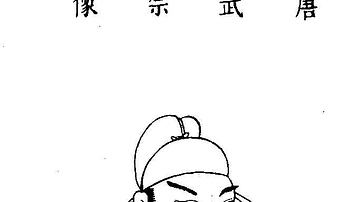
Emperor Wuzong of Tang
Wuzong of Tang (also Wu-Tsung, formerly Li Yan) reigned as emperor of China from 840 to 846 CE. He is best remembered today for his persecution of Buddhists, the worst such attack in all of China's history, and his early...

Definition
Constantine V
Constantine V, also known as Constantine the Dung-named by his enemies, was emperor of the Byzantine empire from 741 to 775 CE. He enjoyed military successes in the Middle East and Balkans but his reign is chiefly remembered for...

Definition
Bardr mac Imair
Bardr mac Imair (c. 873-881 CE, also known as Barid mac Imair, Barith, Baraid) was a Viking king of Dublin, son of the Viking king Imair (Imar, Ivan) who founded the Ui Imair Dynasty in Ireland. Bardr became king in Dublin after...
