
Search
Did you mean: Punt?
Remove Ads
Advertisement
Search Results

Definition
Gauda Kingdom
The Gauda Kingdom came into being in the late 6th century CE in eastern India, as a result of the political disintegration of the Gupta Empire (3rd-6th century CE). Its core areas were situated in what is now the state of Bengal...

Definition
Merlin
Merlin (also known as Myrddin, Merlinus) is the great wizard of the Arthurian Legends best known from Sir Thomas Malory's Le Morte D'Arthur (1469 CE). The character was created by Geoffrey of Monmouth in his History of the Kings of Britain...
Definition
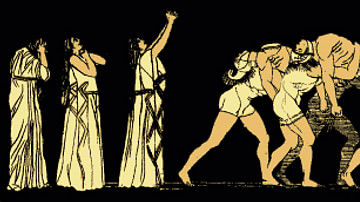
Suppliants by Euripides
The Suppliants (also given as Suppliant Women) is a Greek tragedy written by Euripides, not to be confused with Aeschylus' tragedy of the same title. Its exact date of production is not known, possibly around 424 to 420...

Definition
Marguerite de Navarre
Marguerite de Navarre (l. 1492-1549) was a writer, philosopher, diplomat, and Queen of Navarre, sister of King Francois I (Francis I of France, r. 1515-1547), mother of Jeanne d’Albret (l. 1528-1572) and grandmother of Henry...

Definition
Ceres
Ceres is the goddess of agriculture and the harvest in Roman mythology. Her favor would bring humankind plentiful harvests and fruitful crops, but her wrath brought blight, drought, and famine. Usually depicted as a matron, her symbols...

Definition
Ramayana
The Ramayana is an ancient Indian epic, composed some time in the 5th century BCE, about the exile and then return of Rama, prince of Ayodhya. It was composed in Sanskrit by the sage Valmiki, who taught it to Rama's sons, the twins...

Definition
Ibn Battuta
Ibn Battuta (l. 1304-1368/69) was a Moroccan explorer from Tangier whose expeditions took him further than any other traveler of his time and resulted in his famous work, The Rihla of Ibn Battuta. Scholar Douglas Bullis notes that...

Definition
Tiglath Pileser I
Tiglath Pileser I (reigned 1115-1076 BCE), an Assyrian king of the period known as the Middle Empire, revitalized the economy and the military that had been suffering, more or less, since the death of the king Tukulti Ninurta...

Definition
Tang Dynasty
The Tang Dynasty (618-907 CE) was one of the greatest in Imperial Chinese history. It was a golden age of reform and cultural advancement which lay the foundation for policies which are still observed in China today. The second emperor...
Definition
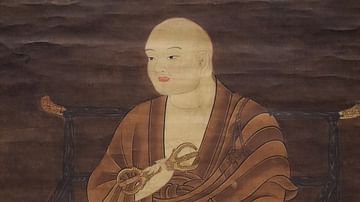
Kukai - Japan's Founder of Shingon Buddhism
Kukai or Kobo Daishi (774-835 CE) was a scholar, poet, and monk who founded Shingon Buddhism in Japan. The monk became the country's most important Buddhist saint and has been credited with all manner of minor...
