
Search
Remove Ads
Advertisement
Search Results
Article
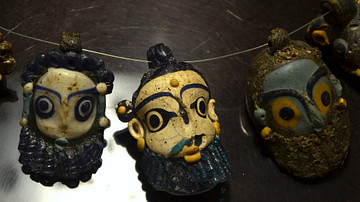
Carthaginian Society
The society of Carthage was dominated by an aristocratic trading class who held all of the important political and religious positions, but below this strata was a cosmopolitan mix of artisans, labourers, mercenaries, slaves...

Article
Sulla's March on Rome
In 88 BCE, Lucius Cornelius Sulla (138-78 BCE) marched on Rome and entered the city's sacred inner boundary, the pomerium, bearing arms. Breaking this taboo, he sought to gain political power and control of the army of the...

Article
Hadrian's Travels
No other Roman emperor travelled as much as Hadrian (r. 117-138 CE). The 'restless' emperor spent more time travelling than in Rome, devoting half of his 21-year reign to the inspection of the provinces. His travels provided...

Article
Elephants in Greek & Roman Warfare
In the search for ever more impressive and lethal weapons to shock the enemy and bring total victory the armies of ancient Greece, Carthage, and even sometimes Rome turned to the elephant. Huge, exotic, and frightening...

Article
Genocide in the Ancient World
Genocide is often viewed as a particular feature of our own current age. This perception largely stems from the terrible events which took place during World War Two in the 20th century CE in the parts of Europe occupied...

Article
Periplus of the Euxine Sea
The Periplus of the Euxine Sea (Circumnavigation of the Black Sea) is a description of trade routes along the shores of the Black Sea written by Arrian of Nicomedia (Lucius Flavius Arrianus), a historian and philosopher...

Article
Roman Expeditions in Sub-Saharan Africa
Sub-Saharan Africa was explored by Roman expeditions between 19 BCE - 90 CE, most likely in an effort to locate the sources of valuable trade goods and establish routes to bring them to the seaports on the coast...

Article
Legions of Spain, Roman Africa & Egypt
The legions of Spain, Roman Africa, and Egypt did not see the intensity of action that prevailed elsewhere in Europe. However, the presence of these four legions - VII Gemina, IX Hispana, XXII Deiotariana, and...

Video
Archaeological Site of Sabratha (UNESCO/NHK)
A Phoenician trading-post that served as an outlet for the products of the African hinterland, Sabratha was part of the short-lived Numidian Kingdom of Massinissa before being Romanized and rebuilt in the...

Image
Map of the Rise & Fall of Carthaginian Power, c. 650–146 BCE
Carthage (traditionally founded c. 814/813 BCE; destroyed 146 BCE) emerged from the wider Phoenician colonial world to become the leading Punic power in the western Mediterranean. From roughly...
