
Search
Remove Ads
Advertisement
Search Results
Article
The Report of Wenamun & the Perils of Living in the Past
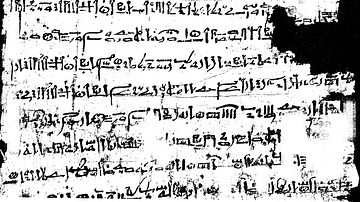
The Report of Wenamun (also known as The Tale of Wenamun or The Report of Wenamon) is an Egyptian literary work dated to c. 1090-1075 BCE toward the end of the New Kingdom (c.1570 - c. 1069 BCE...

Image
New Kalabsha, Egypt
New Kalabsha is a promontory located near the western end of the High Dam a few kilometres south of Aswan. It houses several temples and other structures that have been relocated here from the ancient city of Talmis (later...

Image
What's New by Gauguin
An 1892 oil on canvas, Parau Api (What's New?), by Paul Gauguin (1848-1903) the French post-impressionist painter. Painted in Tahiti. In a letter to his wife, Gauguin wrote: "And these people are called savages!...They sing...
Image
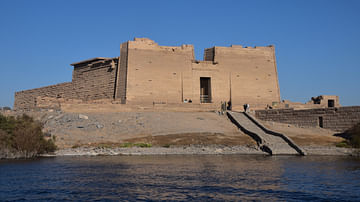
Temple of Mandulis, New Kalabsha
The Temple of Mandulis (also known as the Temple of Kalabsha) is a Roman Period Egyptian temple built as a tribute to Mandulis, a sun god of ancient Nubia. It was constructed by Emperor Augustus around 30 BCE, presumably...

Image
Bailem Valley, Papua New Guinea
Aerial view of the Bailem Valley, Papua New Guinea, a site of ancient Neolithic settlements and explored for the first time by Western explorers in the 1930s. In 2008, the Kuk Early Agricultural Site was designated...

Image
Trail of Tears Memorial at New Echota
Monument in memory of the Cherokee on the Trail of Tears, New Echota, Georgia, USA.
Photograph by Christopher James Culberson, 2006.

Image
Troy, New York, in the Present Day
Panoramic view of downtown Troy, New York, United States, taken from the Congress Street Bridge. In 1860, Harriet Tubman liberated Charles Nalle from slavery in Troy.
Photograph by Matt H. Wade, 2009.

Image
Kiosk of Qertassi, New Kalabsha
The Kiosk of Qertassi is a small but elegant Roman kiosk with four lotus-headed columns inside and two Hathor pillars at the entrance. It dates to the early Roman period (1st century CE) and resembles the Kiosk of...

Video
Haremhab, Pharaoh and Conqueror: New Investigations in His Royal Tomb in the Valley of the Kings
Related exhibition: Haremhab, The General Who Became King November 16, 2010—July 4, 2011 Geoffrey Thorndike Martin, Edwards Professor of Egyptology and Philology...
Image
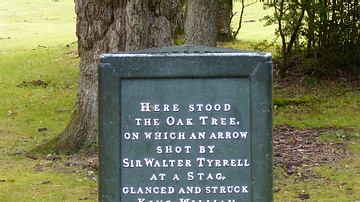
Rufus Stone, New Forest
The Rufus stone (now a metal plaque) which marks the spot in the New Forest, England where William II of England (r. 1087-1100 CE) died in a hunting accident.
