
Search
Remove Ads
Advertisement
Search Results

Image
Nabataean Lamp from Wadi Musa
This is a pottery lamp. Nabataean Period, 100 BCE to 500 CE. From modern-day Wadi Musa, Jordan Hashemite Kingdom. (The Jordan Museum, Amman, Jordan).
Image
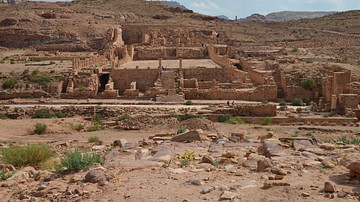
Great Temple, Petra
Frontal view of the Great Temple, a grand monumental complex that lies south of the colonnaded street at Petra (Jordan). The Great Temple is a rectangular complex with a Lower and an Upper Temenos. The Lower Temenos (sacred...
Image
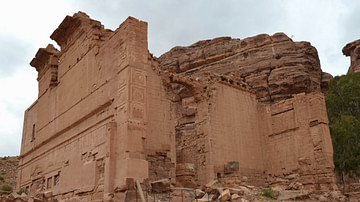
Qasr al-Bint, Petra
Qasr al-Bint, one of the main temples in the Nabataean city of Petra (Jordan). It is located to the northwest of the Great Temple and is one of the best-preserved ancient structures surviving in Petra today. It was probably...

Image
Theatre of Petra
Carved into the side of the mountain at the foot of the High Place of Sacrifice, the theatre of Petra consists of three rows of seats separated by passageways. Seven stairways ascended the cavea (seating section) which accommodated...

Video
Petra (UNESCO/NHK)
Inhabited since prehistoric times, this Nabataean caravan-city, situated between the Red Sea and the Dead Sea, was an important crossroads between Arabia, Egypt and Syria-Phoenicia. Petra is half-built, half-carved into the...

Video
The Rise and Fall of the Kingdom of Nabatea
The Nabatean Kingdom was a powerful political entity which flourished in the region of modern-day Jordan between the 4th century BCE and c. 106 CE and is best known today for the ruins of its capital city...
