
Search
Remove Ads
Advertisement
Search Results
Image
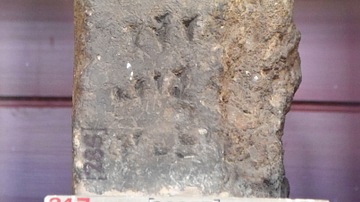
Brick Inscribed with the Name of Shalmaneser III
This cuneiform inscription on this fragment of a large brick mentions the name of the Neo-Assyrian king Shalmaneser III, reigned 858-824 BCE, and the construction of a temple at the city of Nimrud (ancient...

Article
Roman Women in Business
Roman women faced legal, ideological, and cultural limitations in several areas of their lives; deep-rooted traditions regarding the role of women in the Roman world resulted in pre-conceived views which saw women characterised...

Image
Glazed Brick Guardsman from Susa, Iran
This was part of a frieze depicting rows of guards. The vivid colors show how the carved stone sculptures would have looked when they were painted. The guards were thought to be members of the 10,000 special...

Article
Battle of Passchendaele - Haig's Folly in the Mud of Flanders
The Battle of Passchendaele (October-November 1917), the final stage of the Third Battle of Ypres, took place in Flanders, Belgium, during the First World War (1914-18). The aim of the Allied...

Article
Arapaho Creation Story
The Arapaho Creation Story is the account of how the world was made from the mud at the bottom of the endless waters by Father (also given as Pipe Person in some versions) with the help of the duck and the turtle. The story...

Article
Lugalbanda and the Anzud Bird
Lugalbanda and the Anzud Bird is a Sumerian myth dated to the Ur III Period (2047-1750 BCE) featuring the hero-king of Uruk, Lugalbanda, father of Gilgamesh, in his younger years as an honorable officer in the army...

Definition
Greek Dark Age
The Greek Dark Age (c. 1200 to c. 800 BCE, overlapping with the Iron Age, c. 1200-550 BCE) is the modern-day term for the period in Greek history following the Bronze Age Collapse when the Mycenaean Civilization fell and the Linear...

Definition
Persepolis
Persepolis was the capital of the Persian Achaemenid Empire from the reign of Darius I (the Great, r. 522-486 BCE) until its destruction in 330 BCE. Its name comes from the Greek Perses-polis (Persian City), but the Persians knew...

Definition
Ancient Chinese Architecture
Walled compounds, raised pavilions, wooden columns and panelling, yellow glazed roof tiles, landscaped gardens, and a careful application of town planning and use of space are all notable features of the architecture...

Article
Daily Life in Ancient Mesopotamia - Mirroring the Modern World
Daily life in ancient Mesopotamia cannot be described in the same way one would describe life in ancient Rome or Greece. Mesopotamia was never a single, unified civilization, not even under...
