
Search
Remove Ads
Advertisement
Search Results

Image
Mausoleum, Germa Libya
Mausolem near Germa Libya. Located on 26th parallel, it is the most southerly monument of the Roman Empire. It is a stone cube standing about 3m high and features engaged pilasters and four Doric capitals. (Reference...
Image
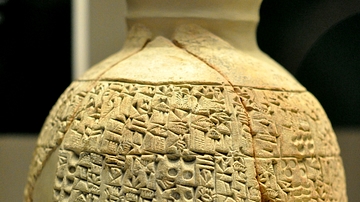
Vessel from Umma
"This is the boundary according to the monument of (the god) Shara". This is the historical cuneiform text on this vessel, which gives the city of Umma's account of its long-running border dispute with Lagash. Early Dynastic III...
Image
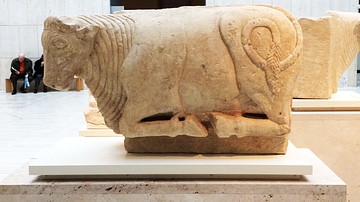
Iberian Bull Statue
This limestone statue of a bull comes from Osuna (Seville), Spain. It dates from the late 5th century CE. It was originally abutted to a funerary monument. Bulls were protectors of tombs, symbols of masculinity, and they were...
Image
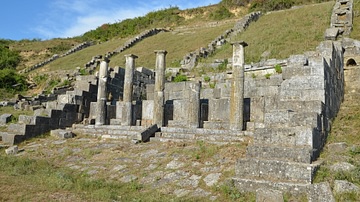
Nymphaeum at Apollonia, Albania
The rectangular basin of the Nymphaeum at Apollonia in Albania, fed by the underground water sources. 3rd century BCE. It is the biggest and best-preserved monument of Apollonia covering an area of 1,500 square metres...

Image
Arch of Constantine I
The north side of the Arch of Constantine I in Rome. Dedicated in 315 CE, the triumphal arch celebrates the emperor's victory over the Roman tyrant Maxentius in 312 CE. It is the largest surviving triumphal arch and the last...
Image
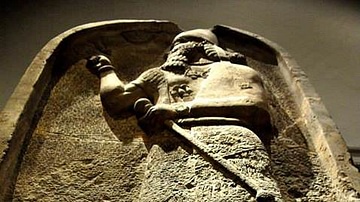
Gypsum Stela of Ashurnasirpal II
The Assyrian king worships gods (Ashur, Shamash, Sin, Adad, and Ishtar) and records his achievements. This freestanding gypsum monument was erected by King Ashurnasirpal II (reigned 883-859 BCE). This stela weighs...

Image
Amun, Ramesses II, & Mut
A granite monument depicting the god Amun, Ramesses II, and the goddess Mut. Dynasty XIX, 1279-1213 BCE. Temple of Amun, Thebes. (Egyptian Museum, Turin, Italy)

Image
Monumental Arch, Glanum
The triumphal arch at Glanum, southern France. The monument was built in the early 1st century CE, perhaps to commemorate the city's new status as a Roman colony. The top third is now missing but figures remain which depict...
Image
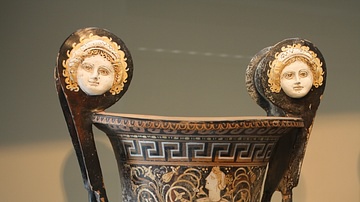
Greek Volute Krater
This vessel was used to mix wine and water and dates from the second half of the fourth century BCE. Provenance: Apula. Depicted are two female figures with gifts approaching a deceased person seated on a funeral monument...
Image
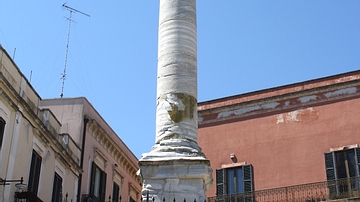
End of the Appian Way Column Marker
A 19.2 m marble column which dates to the 1st century BCE and was part of an honorary monument in Brindisum. Traditionally, the column was thought to mark the end of the Roman road the via Appia (Appian Way) but...
