
Search
Remove Ads
Advertisement
Search Results
Definition
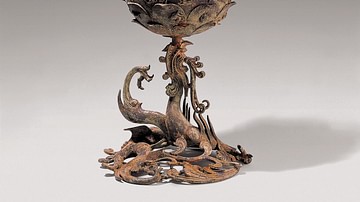
Baekje
Baekje (Paekche) was one of the Three Kingdoms which ruled over ancient Korea from the 1st century BCE to the 7th century CE. Controlling territory in the south-western part of the peninsula the kingdom was in constant rivalry with the...

Definition
Minoan Art
The art of the Minoan civilization of Bronze Age Crete (2000-1500 BCE) displays a love of animal, sea, and plant life, which was used to decorate frescoes and pottery and also inspired forms in jewellery, stone vessels, and sculpture...

Definition
Ancient Japan
Ancient Japan has made unique contributions to world culture which include the Shinto religion and its architecture, distinctive art objects such as haniwa figurines, the oldest pottery vessels in the world, the largest wooden buildings...

Definition
Cylinder Seal - Ancient Personal Identification
Cylinder Seals were impression stamps used by the people of ancient Mesopotamia. Known as kishib in Sumerian and kunukku in Akkadian, the seals were used by everyone, from royals to slaves, as a means of...
Definition
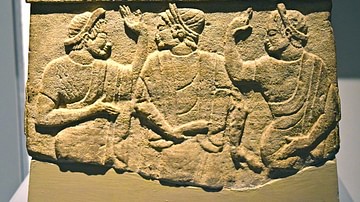
Chiusi
Chiusi (Etruscan name: Clevsin, Roman: Clusium), located in central Italy, was an important Etruscan town from the 7th to 2nd century BCE. Relations with the Romans famously soured when the king of Chiusi, Lars Porsenna, attacked Rome...
Definition
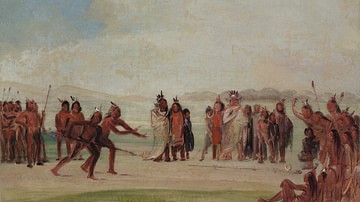
Chunkey
Chunkey (tchung-kee) is a Native American game involving a rolling disc (or ring) and two teams of players who score by throwing their sticks to land as close to the disc as possible. The game is thought to have originated at Cahokia...

Definition
Phoenician Art
The art of the ancient Phoenicians, which flourished between the 19th and 4th centuries BCE, was exported throughout Mesopotamia and the ancient Mediterranean. Best known for their work on small decorative objects, Phoenician artists...
Definition
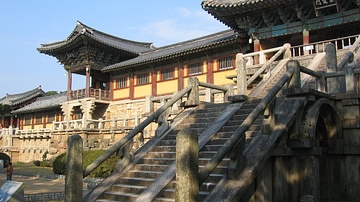
Bulguksa Temple
The Bulguksa Temple (aka Pulguk-sa Temple or 'Temple of the Buddha Land') was built in the 8th century CE on the wooded slopes of Mt. Tohamsan at the ancient Silla capital of Geumseong (modern Gyeongju, South Korea). The Buddhist...

Definition
Wall
The English word 'wall' is derived from the Latin, vallus meaning 'a stake' or 'post' and designated the wood-stake and earth palisade which formed the outer edge of a fortification. The palisades were in use early on and are mentioned...

Definition
Tushpa
Tushpa, later known as Van, was the capital of the Urartu kingdom of ancient Armenia, eastern Turkey, and western Iran from the 9th to 6th century BCE. Located on the eastern shore of Lake Van in modern Turkey, the city was a fortress...
