
Search
Remove Ads
Advertisement
Search Results

Definition
Tulum
Tulum, on the east coast of the Yucatan peninsula in southern Mexico, was an important Mesoamerican centre which displayed both Maya and Toltec influence. Tulum was a major trading and religious centre between the 11th and 16th centuries...

Definition
Diego Velázquez de Cuéllar
Diego Velázquez de Cuéllar (also spelt Velásquez, 1465-1524) was a Spanish conquistador who conquered Cuba in 1511, became the island's first governor for the next decade, and sponsored expeditions of conquest directed...
Definition
Chacchoben
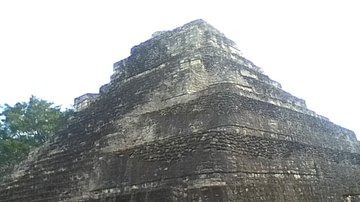
Chacchoben (pronounced chac-CHO-bin) is a Maya site dated to c. 700 located in the state of Quintana Roo, Mexico. Once a large and significant urban religious center, the city was abandoned c. 900-950 CE at about the same time as...

Definition
Adelantado
Adelantado was an office awarded by the Spanish Crown to conduct military campaigns in the medieval period but then repurposed during the Age of Exploration to grant an individual the right to privately fund expeditions of discovery...
Definition
Mitla
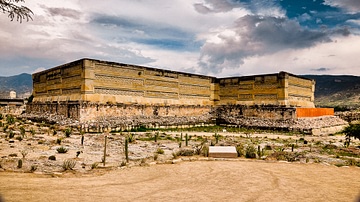
Mitla, located in the eastern portion of the Valley of Oaxaca in southern Mexico, was an important site of the Zapotec civilization. Gaining prominence from the early Post-Classic period (c. 700-900 CE), Mitla became the most important...
Article
The Aztec New Fire Ceremony
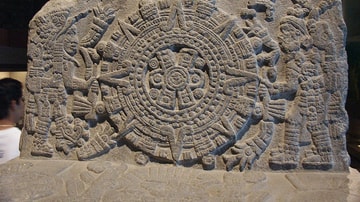
The New Fire Ceremony, also known as the Binding of the Years Ceremony, was a ritual held every 52 years in the month of November on the completion of a full cycle of the Aztec solar year (xiuhmopilli). The purpose of...
Article
Maya Food & Agriculture
For the Maya, reliable food production was so important to their well-being that they closely linked the agricultural cycle to astronomy and religion. Important rituals and ceremonies were held in honour of specialised workers...

Article
The Fall of Tenochtitlan
The fall of Tenochtitlan on 13 August 1521 was a decisive moment in the dramatic collapse of the Aztec empire which had dominated Mesoamerica. Led by Hernán Cortés (1485-1547), the Spanish conquistadors enjoyed superior...
Article
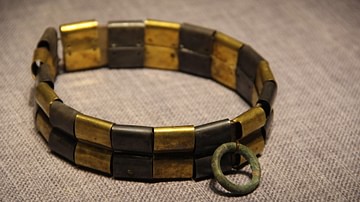
A Brief History of the Dog Collar
The dog collar, so often taken for granted, has a long and illustrious history. Anyone fortunate enough to share their life with a dog in the present day is participating in an ancient tradition every time they place...

Interview
Interview: Preclassic Maya
The genesis of Maya civilization in Mesoamerica was marked by an effervescence in the arts, the beginnings of their written language with glyphs, and a great attention to detail in the sphere of urban planning. Yet, despite...
