
Search
Remove Ads
Advertisement
Search Results

Definition
Xia Dynasty
The Xia Dynasty (c. 2070-1600 BCE) was the first government to emerge in ancient China and the first to adopt the policy of dynastic succession. Consequently, the Xia was the first dynasty of China. Long regarded as a mythical construct...

Definition
Publius Quinctilius Varus
Publius Quinctilius Varus (c. 46 BCE – 9 CE) was a Roman politician and general under the rule of Emperor Augustus. He is most remembered for having lost three Roman legions when ambushed by Germanic tribes in the battle...
Definition
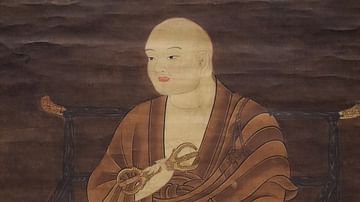
Kukai - Japan's Founder of Shingon Buddhism
Kukai or Kobo Daishi (774-835 CE) was a scholar, poet, and monk who founded Shingon Buddhism in Japan. The monk became the country's most important Buddhist saint and has been credited with all manner of minor...

Definition
Honoré-Gabriel Riqueti, comte de Mirabeau
Honoré-Gabriel Riqueti, comte de Mirabeau (l. 1749-1791) was a French orator and nobleman who rose to prominence as a leader during the early stages of the French Revolution (1789-1799). From the disgraced...

Definition
Britannicus
Britannicus (41-55 CE) was the second child and only son born to the Roman emperor Claudius (r. 41-54 CE) and Valeria Messalina (c. 20-48 CE). Seen as a threat by Claudius' fourth wife, Agrippina the Younger (15-59 CE), and her son...

Definition
Byzantine Empire
The Byzantine Empire existed from 330 to 1453. It is often called the Eastern Roman Empire or simply Byzantium. The Byzantine capital was founded at Constantinople by Constantine I (r. 306-337). The Byzantine Empire varied in...
Definition
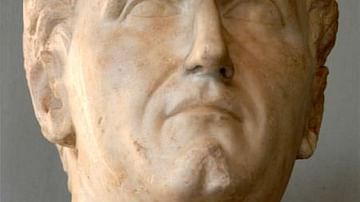
Nerva
Marcus Cocceius Nerva was Roman emperor from 96 to 98 CE, and his reign brought stability after the turbulent successions of his predecessors. In addition, Nerva helped establish the foundations for a new golden era for Rome which his...

Definition
Antoninus Pius
Antoninus Pius was Roman emperor from 138 to 161 CE. When Roman emperor Hadrian (r. 117-138 CE) died on July 10, 138 CE, he left, as did his predecessors, an adopted son as his successor, Antoninus Pius. Antoninus - whose last...

Definition
Inca Religion
For the Incas, as with many other ancient cultures, religion was inseparable from politics, history, and society in general. All facets of community life were closely connected to religious beliefs, from marriages to agriculture...

Definition
Mount Koya
Mount Koya (aka Koyasan), located in the Wakayama Prefecture, south of Osaka, Japan, is the site of a temple complex founded in 819 CE by the scholar monk Kukai as the headquarters for Shingon Buddhism. There are temples and sacred...
