
Search
Did you mean: Mari?
Remove Ads
Advertisement
Search Results
Definition
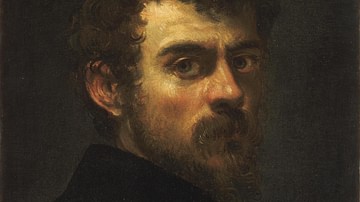
Tintoretto
Tintoretto (c. 1518-1594 CE), real name Jacopo Robusti, was an Italian Renaissance artist who specialised in religious, mythological, and portrait paintings. A prolific artist over a long career, the Venetian's masterpieces are famous for...

Article
The Nerge: Hunting in the Mongol Empire
The peoples of the Mongol Empire (1206-1368 CE) were nomadic, and they relied on hunting wild game as a valuable source of protein. The Asian steppe is a desolate, windy, and often bitterly cold environment, but for those Mongols with sufficient...

Article
Torcello – Tracing the First Settlers of the Venetian Lagoon
Venice was one of the most powerful empires in maritime history. It is now a leading tourist attraction and a must-visit for anyone interested in history and cross-cultural influence. People are drawn to this picturesque city to see the canals...

Article
The Seven Voyages of Zheng He
Admiral Zheng He (aka Cheng Ho, c. 1371-1433 CE) was a Chinese Muslim eunuch explorer who was sent by the Ming dynasty emperor Yongle (r. 1403-1424 CE) on seven diplomatic missions to increase trade and secure tribute from foreign powers...

Image
Transfiguration of Christ
Transfiguration of Christ, painting by Fra Angelico, photograph by Sailko, Florence, 22 July, 2009. This fresco painted by Fra Angelico in Cell 6 at the Convent of San Marco in Florence, now the San Marco Museum, shows Christ standing on...

Image
Djinguereber Mosque, Timbuktu
The Djinguereber Mosque, Timbuktu, Mali. The mosque, made from pounded earth and wood, was built during the reign of Mansa Musa (1312-1337 CE), ruler of the Mali Empire.
Photo credit: UN Photo/Marco Dormino

Definition
Mongol Empire
The Mongol Empire (1206-1368) was founded by Genghis Khan (r. 1206-1227), first Great Khan or 'universal ruler' of the Mongol peoples. Genghis forged the empire by uniting nomadic tribes of the Asian steppe and creating a devastatingly effective...

Definition
Ancient China
Ancient China produced what has become the oldest extant culture in the world. The name 'China' comes from the Sanskrit Cina (derived from the name of the Chinese Qin Dynasty, pronounced 'Chin') which was translated as 'Cin' by the Persians...

Definition
Silk in Antiquity
Silk is a fabric first produced in Neolithic China from the filaments of the cocoon of the silk worm. It became a staple source of income for small farmers and, as weaving techniques improved, the reputation of Chinese silk spread so that...

Definition
Pepper
Since antiquity, pepper has always been the most important spice in the world. It played a central role in the medicines of ancient India and China, became a critical component of Roman food, and remained central in the cuisine of medieval...
