
Search
Did you mean: Mari?
Remove Ads
Advertisement
Search Results
Image
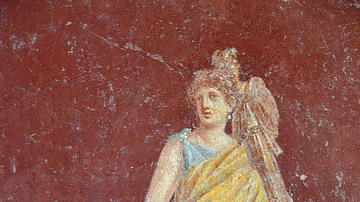
Iphigenia with the Palladium
Fresco depicting Iphigenia, daughter of King Agamemnon, with the Palladium (cult image of Pallas Athena). Mid-1st century CE. From Room 30 of the Villa San Marco in Stabiae, Italy.
Image
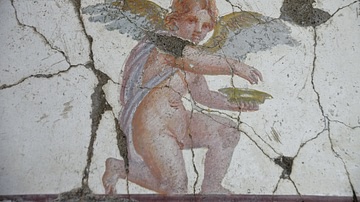
Wall Painting of a Kneeling Eros
Fresco depicting a kneeling Eros holding a dish. Mid-1st century CE. From Room 30 of the Villa San Marco in Stabiae, Italy.
Image
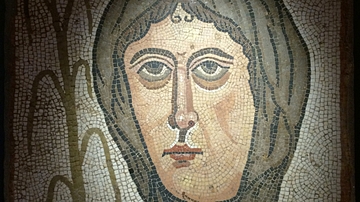
Roman Mosaic of Winter
This mosaic is made of limestone and marble, and it dates from the 4th century CE. It was found at Quintana del Marco (León), Spain. (Museo Arqueológico Nacional, Madrid)
Image
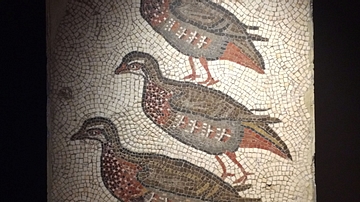
Roman Mosaic with Partridges
This mosaic is made from limestone and marble, and it dates from the 4th century CE. It was found at Quintana del Marco (León), Spain. (Museo Arqueológico Nacional, Madrid)
Image
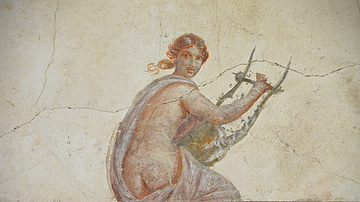
Painted Figure with Lyre
Roman fresco depicting a woman holding a lyre. Mid-1st century CE. From Room 30 of the Villa San Marco in Stabiae, Italy.

Video
Constantinople (Istanbul, Turkey) - Ancient Rome Live
The Roman Emperor Constantine founded Constantinople on Byzantium, a strategic site for controlling the Bosphorus by the Greeks and as recently as Septimius Severus. This city was Constantine's "New Rome" with churches, walls, hippodrome...

Video
The Ancient Egyptian Practice and Process of Mummification
Mummification of the deceased is a practice that began in ancient Egypt as early as 3500 BCE that not only prevented the body from decay and decomposition but was done to ensure the deceased’s successful passage to the afterlife because a...
Article
Etymology of the Name India
The name of India is a corruption of the word Sindhu. Neighbouring Arabs, Iranians uttered's' as 'h' and called this land Hindu. Greeks pronounced this name as Indus. Sindhu is the name of the Indus River, mentioned in the Rig-Veda, one...
