
Search
Did you mean: Cimon?
Remove Ads
Advertisement
Search Results

Definition
Column
The column was an architectural invention that allowed for the support of ceilings without the use of solid walls. Columns increase the space which can be spanned by a ceiling, allowing the entrance of more light. Columns also offer an...
Definition
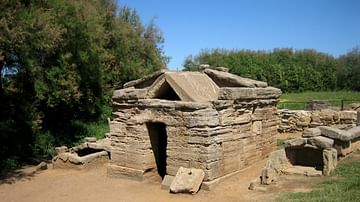
Populonia
Populonia (Etruscan name: Pupluna or Fufluna), located on the western coast of Italy, was an important Etruscan town which flourished between the 7th and 2nd century BCE. Rich in metal deposits and so noted for its production of pig...
Definition
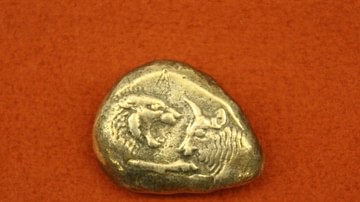
Lydia
Lydia was a region of western Asia Minor which prospered due to its natural resources and position on trading routes between the Mediterranean and Asia. The Kingdom of Lydia flourished in the 7th and 6th centuries BCE and expanded to...
Definition
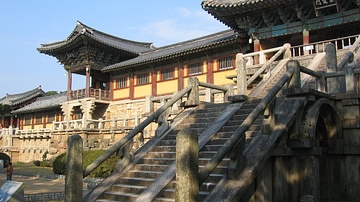
Bulguksa Temple
The Bulguksa Temple (aka Pulguk-sa Temple or 'Temple of the Buddha Land') was built in the 8th century CE on the wooded slopes of Mt. Tohamsan at the ancient Silla capital of Geumseong (modern Gyeongju, South Korea). The Buddhist...

Definition
Atalanta - The Huntress of Greek Mythology
Atalanta is a figure from Greek mythology famed as a huntress, wrestler, and runner. The heroine was a key participant in the Calydonian boar hunt, striking the first wound in this fearsome beast with her bow...

Definition
Eleanor of Aquitaine
Eleanor of Aquitaine (l. c. 1122-1204 CE) was one of the most impressive and powerful figures of the High Middle Ages (1000-1300 CE) – male or female – whose influence shaped the politics, art, medieval literature, and perception...

Definition
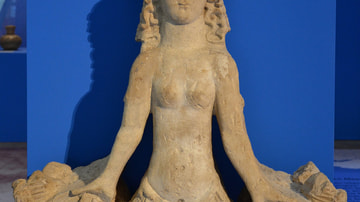
Sacred Band of Thebes
The Sacred Band of Thebes was an elite unit of the Theban army comprised of 150 gay male couples totaling 300 men. They were formed under the leadership of Gorgidas but first achieved fame under the general Pelopidas. They...
Definition
Scythian Religion
Scythian religion appears to be an amalgam of belief in a pantheon of gods grafted to more ancient animal reverence and shamanistic practice. According to their burial finds, the Scythians appear to have had a deep affinity with...

Definition
Dionysos
Dionysos (Roman name: Bacchus, also known as Dionysus) was the ancient Greek god of wine, merriment, and theatre. Being the bad boy of Mt. Olympus, Dionysus was perhaps the most colourful of the Olympian Gods. Son of Zeus In Greek...

Definition
Hallstatt Culture
The Hallstatt culture is named after the site of that name in Austria and it flourished in central Europe from the 8th to 6th century BCE. The full period of its presence extends from c. 1200 to c. 450 BCE - from the Late Bronze...
