
Search
Did you mean: Siren?

 This answer was generated by
 Search Results
Image
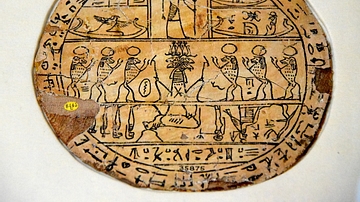
Linen Hypocephalus
Hypocephali are inscribed discs usually of plastered linen and less frequently of papyrus or bronze, were placed beneath the heads of mummies in the Late/Ptolemaic Periods. The texts written on them were taken from spell 162 of the Egyptian...
Image
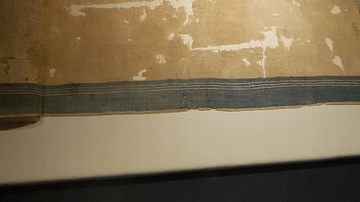
Egyptian Linen
A portion of Egyptian linen. Linen was the most common fabric used by embalmers to wrap the body, often in vast quantities. The woven blue bands on this piece suggest that it once formed part of a garment. New Kingdom to Late Period, (about...
Image
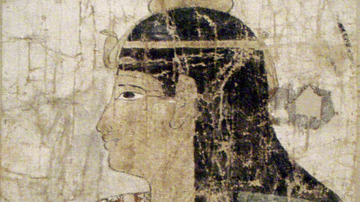
Nephthys on Painted Linen
Painted linen and tempera depicting the Egyptian goddess Nephthys. 2nd-1st century BCE. (Metropolitan Museum of art, New York)
Image
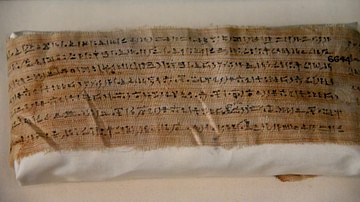
Mummy Linen Inscribed with Portion of the Book of the Dead
Mummy wrapping of a man named Djedher, son of Sekhmetnefret, inscribed in hieratic with funerary texts from the Egyptian Book of the Dead. From Saqqara, Egypt, Late Period of ancient Egypt, 4th century BCE or later. The British Museum, London...

Video
Greek & Roman Linen Body Armour
Professor Gregory Aldrete speaks about 'Linen body armour: reconstruction and tests' at the Greek and Roman Armour Day, 20th July 2015.

Article
Clothes in the Elizabethan Era
Clothes in the Elizabethan era (1558-1603 CE) became much more colourful, elaborate, and flamboyant than in previous periods. With Elizabeth I of England (r. 1558-1603 CE) herself being a dedicated follower of fashion, so, too, her court...

Article
Fashion & Dress in Ancient Egypt
Fashion in ancient Egypt epitomized the concept of simplicity and ease in movement and remained relatively unchanged in this regard for over 3,000 years. Clothing and footwear differed in ornamentation between the upper and lower classes...
Definition
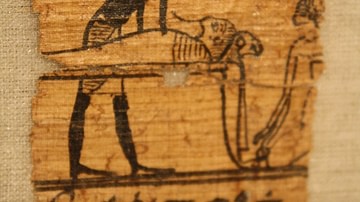
Ancient Egyptian Burial
Egyptian burial is the common term for the ancient Egyptian funerary rituals concerning death and the soul's journey to the afterlife. Eternity, according to scholar Margaret Bunson, “was the common destination of each man, woman and child...

Article
Mummification in Ancient Egypt
The practice of mummifying the dead began in ancient Egypt c. 3500 BCE. The English word mummy comes from the Latin mumia which is derived from the Persian mum meaning 'wax' and refers to an embalmed corpse which was wax-like. The idea of...

Article
The Admonitions of Ipuwer - A Tale of Chaos and the Importance of Government
The Admonitions of Ipuwer (also known as The Papyrus Ipuwer and The Admonitions of an Egyptian Sage) is a literary text dated to the Middle Kingdom of Egypt (2040-1782 BCE). The only extant copy of the work, preserved on the Papyrus Leiden...
