
Search
Remove Ads
Advertisement
Search Results

Collection
History of Chinese Literature
Ancient Chinese literature developed following the evolution of script which evolved from divination practices of the Shang Dynasty (1600-1046 BCE). The pictographs made on oracle bones by diviners became the script known as Jiaguwen (c...
Collection
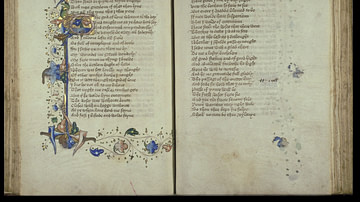
Medieval European Literature
Medieval literature developed in Europe from medieval folklore between c. 476 and c. 1500. The works ranged from poetry to drama, romance, prose, philosophical dialogues, and histories. Literary works were at first composed in Latin but...

Article
Depictions of India in Ancient Literature
Herodotus (484 BCE – c. 425 BCE) has been called the Father of History since he was the first historian known to collect his materials in detail, test their accuracy to a certain extent and arrange them in a well-constructed and vivid narrative...

Article
Japanese Castles
Fortifications of one kind or another had been used in Japan since ancient times, but in the period from 1576 until 1639, a new and distinctive style of castle was constructed. Rather than being used for fighting, these were impressive structures...

Definition
Ancient Japan
Ancient Japan has made unique contributions to world culture which include the Shinto religion and its architecture, distinctive art objects such as haniwa figurines, the oldest pottery vessels in the world, the largest wooden buildings anywhere...

Video
Heian Literature and Japanese Court Women
This short lecture discusses about two of the most famous works of literature in Japanese history, both written by court women during the Heian period (794-1185CE): Murasaki Shikibu’s "The Tale of Genji" and Sei Shonagon’s "The Pillow Book"...

Definition
Edo Period
The Edo period refers to the years from 1603 until 1868 when the Tokugawa family ruled Japan. The era is named after the city of Edo, modern-day Tokyo, where the Tokugawa shogunate had its government. It is also sometimes referred to as the...
Definition
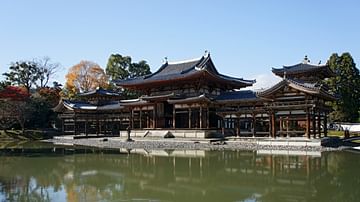
Heian Period
The Heian Period of Japanese history covers 794 to 1185 CE and saw a great flourishing in Japanese culture from literature to paintings. Government and its administration came to be dominated by the Fujiwara clan who eventually were challenged...

Definition
Azuchi-Momoyama Period
The Azuchi-Momoyama Period (Azuchi-Momoyama Jidai, aka Shokuho Period, 1568/73 - 1600 CE) was a brief but significant period of medieval Japan's history which saw the country unified after centuries of a weak central government and petty...

Definition
Potsdam Conference - When the WWII Allies Declared Japan Must Surrender
The Potsdam Conference, held from 17 July to 2 August 1945 in Potsdam in eastern Germany, decided how the Allies would deal with a defeated Germany and how they could best conduct the ongoing campaign against Japan as the Second World War...
