
Search
Did you mean: Mycenae?
Remove Ads
Advertisement

 This answer was generated by
Search Results
Image
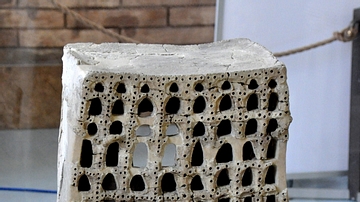
Incense Burner from Assur
This incense burner was found at the so-called Archaic Ishtar Temple at Assur (Ashur). Incineration of various substances was an important event during sacrificial ceremonies. From Assur, northern Mesopotamia, Iraq. 2400...

Image
Incense Burner from Tell Bazmusian
This pottery incense burner/container was found at Tell Bazmusian, Lake Dukan, Sulaymaniyah, Iraq. A wild goat is topped by a 2-story house model with a chimney. Hurrian period, mid-2nd century BCE. On display at...
Image
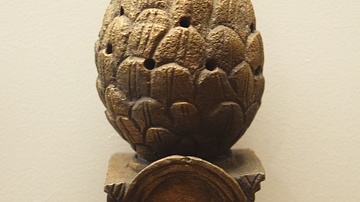
Late Classical Incense Burner from Georgia
This late classical bronze incense burner comes from Zghuderi, Georgia. It dates from c. 50-350 CE. (Georgian National Museum, Tbilisi)
Image
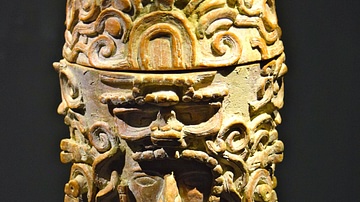
Classical Maya Incense Container
This painted incense container is made from cut stone and dates from c. 600-900 CE. Maya artisans created it in what is present-day Guatemala during the Classical era. (Musée du Cinquantenaire, Brussels)

Image
Mesopotamian Incense Container
A pottery incense container found at layer 5 of the altar platform of the central temple of Basmosian Hill, Mesopotamia, Hurrian period, 2nd millennium BCE.
Sulaimaniya Museum, Iraq.
Image
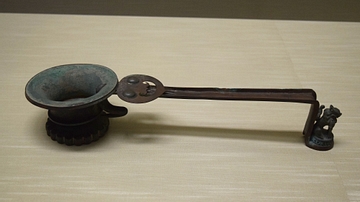
Ancient Japanese Incense Burner
This ancient Japanese incense burner has a lion-shaped weight at the end of its handle. It was cast in bronze and dates from the 8th century CE during the Nara period in Japanese history. (Tokyo National Museum)

Image
Israelite Incense Altar
This object is a limestone incense altar. It was excavated from Megiddo and dates to the Iron Age II (9th Century BCE). It has a height of 54.5 cm (21.4 in), a width of 27 cm (10.6 in), and a length of 28.5 cm (11.2 in...

Image
Burning Incense, Hungry Ghosts Festival
As part of the Hungry Ghosts Festival, incense is burned in front of homes in remembrance of one's ancestors and to give a pleasing scent to the spirits as they walk by.

Image
Maya Incense Burner
A Maya incense burner in the form of Itzamnaaj. The god wears a costume with feline headdress. Painted ceramic, c. 1200-1521, Peten, Guatemala (St. Louis Art Museum, Missouri)
Image
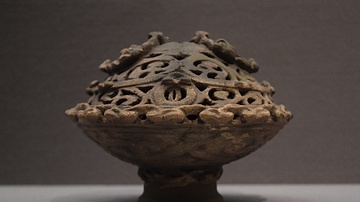
Jomon Incense Burner
A Jomon incense burner. Rokugo Ishinadate, Misato-cho, Akita, Japan. Jomon Period, 1000-400 BCE. (Tokyo National Museum)
