
Search
Remove Ads
Advertisement

 This answer was generated by
 Search Results
Definition
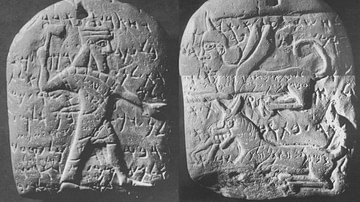
Arslan Tash Amulet
Dated to the 7th century BCE, the Arslan Tash amulet (AT1) was discovered in Arslan Tash, Syria and contains the writing of Phoenician, magic incantations. The limestone plaque includes a variety of features: incantations perceived...
Image
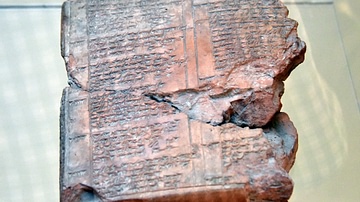
Incantation Against Impotence Tablet from Hattusa
This clay tablet gives some methods of how to treat sexual impotency. For example: "If a man's potency comes to an end in the month of nisannu, you catch a male partridge, you pluck its wings, strangle...

Image
Aramaic Incantation Bowl
A magical bowl with an incantation written in ink to ward off malevolent spirits. Clay, inscribed in Aramaic language, 3rd to 7th century CE. From Babylon, Iraq. (The Sulaimaniya Museum, Iraq).

Article
Enuma Elish - The Babylonian Epic of Creation - Full Text
The Enuma Elish (also known as The Seven Tablets of Creation) is the Babylonian creation myth whose title is derived from the opening lines of the piece, "When on High". The myth tells the story...

Article
Medicine in Ancient Mesopotamia - A Gift of the Gods to Their People
In ancient Mesopotamia, the gods informed every aspect of daily life, including the practice of medicine. Gula, the Sumerian goddess of healing, presided over the medical arts, guiding...
Article
Ancient Mesopotamian Ghost Spell - Keeping the Dead Where They Belong
Medicine in ancient Mesopotamia was based on the belief that illness was caused by supernatural agencies and, although medicines were given and injuries treated, magical spells and incantations...

Definition
Pazuzu - The Mesopotamian Demon of Destruction and Protection
Pazuzu is a Babylonian/Assyrian demon who was most popular in the first millennium BCE. He was the son of Hanbi (also Hanba), king of the demons of the underworld, and brother of Humbaba, the...

Definition
Tiamat - The Great Mesopotamian Goddess of Chaos
Tiamat is the Mesopotamian goddess associated with primordial chaos and the salt sea, best known from the Babylonian epic Enuma Elish. In all versions of the myth, following the original, Tiamat always...

Definition
Gula - The Sumerian Goddess of Doctors and the Healing Arts
Gula (also known as Ninkarrak) is the Sumerian goddess of healing and patroness of doctors, healing arts, and medical practices. She is first attested to in the Ur III period (circa 2112 to circa...

Definition
Heka
Heka is the god of magic and medicine in ancient Egypt and is also the personification of magic itself. He is probably the most important god in Egyptian mythology but is often overlooked because his presence was so pervasive as to make...
