
Search
Did you mean: Horae?
Remove Ads
Advertisement

 This answer was generated by
 Search Results
Image
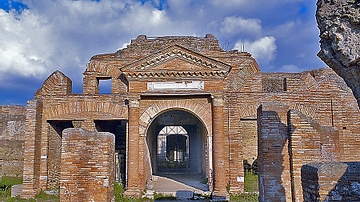
Horrea Epagathiana, Ostia
The main entrance of the 2nd century CE Horrea Epagathiana, Ostia. Horrea were used to store huge quantities of foodstuffs such as grain, however, the large number of locks found at the site suggest this particular building was used to store...

Definition
Ostia
Ostia (or Ostia Antica) lies 15 km from the city of Rome for which it served as the city's principal port and harbour throughout antiquity. The name derives from 'os' or 'ostium' which means 'mouth' and refers to the city's location at the...

Definition
Roman Warfare
Roman warfare was remarkably successful over many centuries and across many territories. This was due to several important factors. Italy was a peninsula not easily attacked, there was a huge pool of fighting men to draw upon, a disciplined...

Definition
Pepper
Since antiquity, pepper has always been the most important spice in the world. It played a central role in the medicines of ancient India and China, became a critical component of Roman food, and remained central in the cuisine of medieval...

Definition
Roman Fort
The Roman army constructed both temporary and permanent forts and fortified military camps (castrum) across the frontiers of the empire's borders and within territories which required a permanent military presence to prevent indigenous uprisings...
Definition
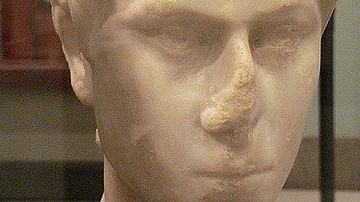
Constantius II
Constantius II ruled the Roman Empire between 337-361 CE. He was the second son of Constantine the Great and Fausta. Constantius was a devout follower of Arianism Christianity. Ruling for 24 years, he was the longest reigning son of Constantine...
Image
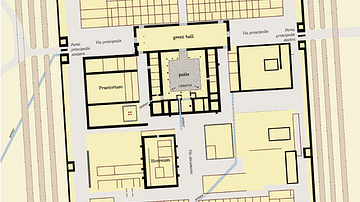
Plan of a Typical Roman Fort
A plan of the layout of a typical Roman fort. Buildings included barracks, accommodation for the commanding officer (praetorium), granaries (horrea), workshops (fabricae), a hospital (valetudinarium), a cistern, and in the case of larger...

Quiz
Innovations & Architecture in Ancient Rome
Innovations Innovation architecture roman ancient Rome Aqueducts Bridges Basilicas Roman baths Temples Theatres Amphitheatres Triumphal Arches The Horrea Corinthian Doric Ionic Patronage
Image
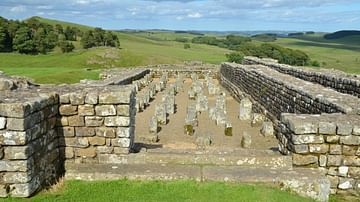
Housesteads Roman Fort, Granaries
The north granary of Housesteads Roman Fort (Vercovicium). All Roman forts had granaries (horrea) to store sufficient supplies for the garrison and for soldiers out on campaign. The granaries of Housesteads Roman Fort are the most substantial...
