
Search
Did you mean: Heka?
Remove Ads
Advertisement
Search Results
Image
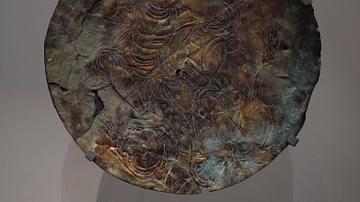
Zao Gongen, Engraved Mirror
An engraved bronze mirror depicting Zao Gongen. From Mt. Omin Peak site, Tenkawa-mura, Nara, Japan. Heian Period, 10-12th century CE. Important Art Object. (Tokyo National Museum)
Image
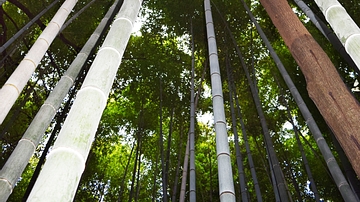
Arashiyama Sacred Grove
The Arashiyama "Sacred Grove" or bamboo forest is located in Arashiyama, Japan. Arashiyama and the adjoining Sagano area first became popular during the Heian period when courtiers and the imperial family sought privacy and seclusion away...
Image
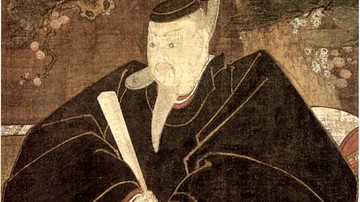
Tenjin (Sugawara no Michizane)
A representation of Sugawara no Michizane, aka Tenjin, (845-903 CE) on painted silk. Michizane was a scholar, poet and high-level administrator in the Japanese court during the Heian Period. He was later deified as the god of scholarship...
Image
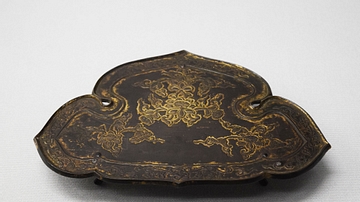
Japanese Ritual Implement Stand
This ritual stand has a lotus flower and arabesque design. It is made of gilt bronze and dates from the 12th century CE, which corresponds to the Heian era. Important cultural property. (Tokyo National Museum)

Definition
Medieval Japan
The medieval period of Japan is considered by most historians to stretch from 1185 to 1603 CE. Stand out features of the period include the replacement of the aristocracy by the samurai class as the most powerful social group, the establishment...

Definition
Shinto
Shinto means 'way of the gods' and it is the oldest religion in Japan. Shinto's key concepts include purity, harmony, family respect, and subordination of the individual before the group. The faith has no founder or prophets and there is...

Definition
Ancient Korea
Korea, located on a large peninsula on the eastern coast of the Asian mainland, has been inhabited since Neolithic times. The first recognisable political state was Gojoseon in the second half of the first millennium BCE. From the 1st century...

Definition
Samurai Sword
Swords used by Japanese samurai were renowned for the craftsmanship which produced strong yet flexible curved steel blades with a single, super-sharp cutting edge. Produced from the 8th century CE onwards and symbolic of the samurai's elevated...

Definition
Asuka Period
The Asuka Period (Asuka Jidai) of ancient Japan covers the period from 538 CE to 710 CE and, following on from the Kofun Period (c. 250-538 CE), so constitutes the latter part of the Yamato Period (c. 250-710 CE). For some scholars the period...

Definition
Nihon Shoki
The Nihon Shoki ('Chronicle of Japan' and also known as the Nihongi) is an official history of Japan which was written by a committee of court scholars in 720 CE. It is a compilation of myths and legends concerning the Shinto gods and episodes...
