
Search
Did you mean: Hera?
Search Results
Article
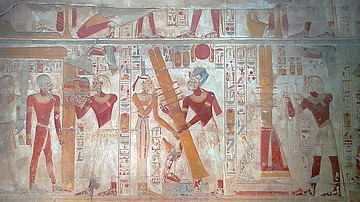
The Forty-Two Judges
The Forty-Two Judges were divine entities associated with the afterlife in ancient Egypt and, specifically, the judgment of the soul in the Hall of Truth. The soul would recite the Negative Confession in their presence as well as other gods...

Article
The Soul in Ancient Egypt
At the beginning of time, the god Atum stood on the primordial mound in the midst of the waters of chaos and created the world. The power which enabled this act was heka (magic) personified in the god Heka, the invisible force behind the...

Article
Egyptian Gods - The Complete List
The gods and goddesses of Ancient Egypt were an integral part of the people's everyday lives for over 3,000 years. There were over 2,000 deities in the Egyptian pantheon, many whose names are well known - Isis, Osiris, Horus, Amun, Ra, Hathor...

Article
Egyptian Afterlife - The Field of Reeds
The ancient Egyptians believed that life on earth was only one part of an eternal journey which ended, not in death, but in everlasting joy. When one's body failed, the soul did not die with it but continued on toward an afterlife where one...
Article
Ludlul-Bel-Nemeqi
The Ludlul-Bel-Nemeqi (c. 1700 BCE) is a Sumerian and later Babylonian poem on the theme of unjust suffering, which is thought to have influenced the biblical Book of Job. Also known as The Poem of the Righteous Sufferer, the title translates...

Article
Uʻtlûñ′tă, the Spear-Finger
Uʻtlûñ′tă, the Spear-Finger is a legend of the Cherokee nation, defined as a wonder story – a tale involving a supernatural entity – in which higher powers contend with each other or mortals must navigate the supernatural world or defend...

Article
Truths Wrapped in Fiction: Mesopotamian Naru Literature
Originality in literary compositions in the ancient world did not carry the same weight and value as it does today. In recent centuries, authors have been applauded for the creation of original works and have been derided for plagiarism or...

Article
Poor Man of Nippur
The Poor Man of Nippur (c. 701 BCE) is a Babylonian poem on the themes of the obligations of hospitality and revenge for an undeserved injury. A poor man of the city of Nippur feels mistreated when he visits the mayor and then goes to great...
Article
Hymn to Nungal
The Hymn to Nungal (c. 2000-1600 BCE) is a Sumerian poem praising Nungal, the goddess of prisons and rehabilitation (also associated with the underworld), as well as the prison house she presided over. The piece, also known as Nungal A, was...

Definition
Ancient Egyptian Mythology
Egyptian mythology was the belief structure and underlying form of ancient Egyptian culture from at least c. 4000 BCE (as evidenced by burial practices and tomb paintings) to 30 BCE with the death of Cleopatra VII, the last ruler of the Ptolemaic...
