
Search
Did you mean: Dacia?
Remove Ads
Advertisement
Search Results

Definition
John II Komnenos
John II Komnenos “the Handsome” was emperor of the Byzantine Empire from 1118 CE to 1143 CE. John, almost constantly on campaign throughout his reign, would continue the military successes of his father Alexios I with significant victories...

Article
1204: The Sack of Constantinople
In 1204 CE the unthinkable happened and Constantinople, after nine centuries of withstanding all comers, was brutally sacked. Even more startling was the fact that the perpetrators were not any of the traditional enemies of the Byzantine...

Article
Women in the Byzantine Empire
Women in the Byzantine Empire (4th to 15th century CE) were, amongst the upper classes, largely expected to supervise the family home and raise children while those who had to work for a living did so in most of the industries of the period...

Article
Sacred Cakes in Ancient Greece
Sacred cakes in ancient Greece were baked loaves, biscuits, pastries, and sponges sweetened with honey (meli) and prepared as unburnt offerings to the gods and goddesses and other divine beings. Unburnt offerings were substitutes for or a...
Article
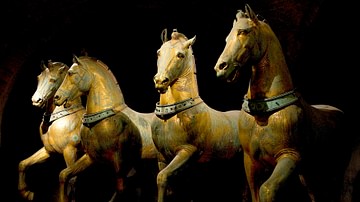
The Hippodrome of Constantinople
The Hippodrome of Constantinople was an arena used for chariot racing throughout the Byzantine period. First built during the reign of Roman emperor Septimius Severus in the early 3rd century CE, the structure was made more grandiose by emperor...

Article
The Great Palace of Constantinople
The Great Palace of Constantinople was the magnificent residence of Byzantine emperors and their court officials which included a golden throne room with wondrous mechanical devices, reception halls, chapels, treasury, and gardens. In use...

Article
Minoan Stoneware
Craftsmen of the Minoan civilization centred on the island of Crete produced stone vessels from the early Bronze Age (c. 2500 BCE) using a wide variety of stone types which were laboriously carved out to create vessels of all shapes, sizes...

Article
The Differences Between Byzantine & Armenian Christianity
Although both the Byzantines and the Armenians were Christian, the types of Christianity they professed had important differences that led to a lack of recognition and tensions between the two groups and a considerable part of their relationship...

Article
Byzantine-Armenian Relations
The relationship between the Byzantine Empire and ancient Armenia was a constant and varied one with an equal mix of wars, occupations, treaties of friendship, mutual military aid, and cultural exchange. Regarded as a vital defence to the...
Interview
Interview: Barry Strauss on Ten Caesars
Dr. Barry Strauss' Ten Caesars: Roman Emperors from Augustus to Constantine tells the epic story of the Roman Empire from its rise to its eastern reinvention, from Augustus, who founded the empire, to Constantine, who made it Christian and...
