
Search
Did you mean: Greek Fire?
Remove Ads
Advertisement
Search Results

Definition
Plutus (Play)
Plutus (aka Wealth) is a play written by the great Greek comedy playwright Aristophanes in 388 BCE. It was the last of his plays to be performed during his lifetime. Like his earlier play Ecclesiazusae (The Assemblywomen), Wealth...
Definition
Hermes - The Messenger of the Olympian Gods
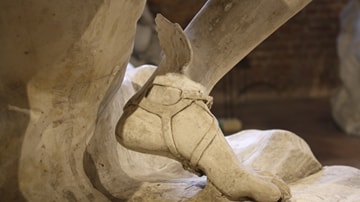
Hermes was the ancient Greek god of trade, wealth, luck, fertility, animal husbandry, sleep, language, thieves, and travel. One of the cleverest and most mischievous of the 12 Olympian gods, Hermes was their...

Definition
Hera
Hera (Roman name: Juno) is the wife of Zeus and queen of the ancient Greek gods. Hera represented the ideal woman, was the goddess of marriage and the family, and protectress of women in childbirth. Hera was always faithful to Zeus but...

Definition
Poseidon
Poseidon was the Greek god of the sea and rivers, creator of storms and floods, and the bringer of earthquakes and destruction. He was perhaps the most disruptive of all the ancient gods but he was not always a negative force. He was...

Definition
Andromache
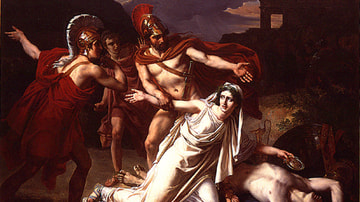
Andromache is a Greek tragedy written by Euripides (c. 484-407 BCE), one of only 19 plays (out of 92) to survive. The play is actually in two parts, and like Sophocles' Women of Trachis, it has no central character. The first part...
Definition
Antigone
Antigone was the third play in the Oedipus trilogy written by the great Greek playwright Sophocles (c. 496 - c. 406 BCE). Produced around 441 BCE and receiving first prize at the Dionysia festival, the tragedy was actually written long...

Definition
Pasiphaë
Pasiphaë ("all-shining") is the wife of King Minos of Crete and the mother of the fearsome Minotaur (half-bull, half-man creature) in Greek mythology. She is the daughter of the sun god Helios and Perse, an Oceanid. Like her sister...

Definition
Hecate
Hecate (Hekate) is a goddess of Greek mythology capable of both good and evil. She was associated with witchcraft, magic, the Moon, doorways, and creatures of the night like hell-hounds and ghosts. Hecate often carries a torch in her...

Definition
Hellenistic Warfare
When Alexander the Great died in 323 BCE, he left behind an empire devoid of leadership. Without a named successor or heir, the old commanders simply divided the kingdom among themselves. For the next three decades, they fought...
Definition
Typhon
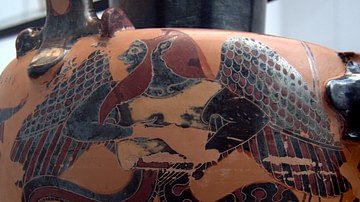
Typhon (also Typheus) is the largest and most dreadful monster in Greek mythology. He was tall, with a brutish face, and had wings, countless snakeheads in place of hands, and a lower body made up of coiled serpents. His eyes flashed...
