
Search
Search Results

Article
The Hellenistic World: The World of Alexander the Great
The Hellenistic World (from the Greek word Hellas for Greece) is the known world after the conquests of Alexander the Great and corresponds roughly with the Hellenistic Period of ancient Greece, from 323 BCE (Alexander's death) to the annexation...
Article
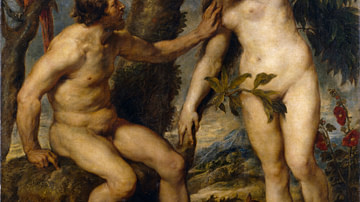
The Christian Concept of Human Sexuality as Sin
In the ancient world, human sexuality was crucial for the survival of the tribe and clan as well as pleasurable, a gift from the gods. Thousands of native cults emphasized fertility through rituals and prayers, and ancient gods were depicted...

Definition
Quasi-War
The Quasi-War (1798-1800) or 'Half War' was a limited, undeclared naval conflict fought between the United States and the First French Republic. Hostilities arose when French privateers began attacking neutral American shipping, resulting...

Definition
Russian Civil War - The Failed Fightback Against Bolshevism
The Russian Civil War (1917-22) began shortly after the Bolshevik Revolution of November 1917. The Bolsheviks (the Reds) immediately found themselves in conflict with various opposition forces who disagreed with Bolshevik policies like abolishing...

Definition
War of the Fourth Coalition
The War of the Fourth Coalition (October 1806 to June 1807) was a major conflict during the Napoleonic Wars (1803-1815). The Fourth Coalition consisted of Russia, Prussia, Saxony, Sweden, and the United Kingdom, against the First French Empire...

Image
No Man's Land in the First World War
No Man's Land, illustration by Lucien Jonas, 1927. Lucien Jonas was a French artist appointed as an official military painter after being mobilized in 1914, becoming one of the most prolific and renowned wartime artists of the First World...

Article
Trade in Medieval Europe
Trade and commerce in the medieval world developed to such an extent that even relatively small communities had access to weekly markets and, perhaps a day's travel away, larger but less frequent fairs, where the full range of consumer goods...

Definition
First Intermediate Period of Egypt
The First Intermediate Period of Egypt (2181-2040 BCE) is the era which followed the Old Kingdom (c. 2613-2181 BCE) and preceded the Middle Kingdom (2040-1782 BCE) periods of Egyptian history. The name was given to the era by 19th-century...

Image
Map of the United States on the Eve of Civil War, 1861
In early 1861, the United States entered the most severe constitutional and political crisis in its history. The election of Abraham Lincoln (president 1861–1865) triggered a wave of secessions beginning with South Carolina in December 1860...

Article
Trade in Ancient Celtic Europe
Trade in raw materials and manufactured goods in ancient Celtic Europe was vibrant and far-reaching, particularly regarding the centre of the continent where there was a hub of well-established trade routes. As the Celts' territory expanded...
