
Search
Remove Ads
Advertisement
Search Results

Image
Han Jade Burial Suit
A funerary garment from the Han dynasty (2nd century BCE - 2 century CE). Made from hundreds of small rectangles of jade stitched together using gold and silver wire, they were used to completely encase the body of deceased royalty. (On...
Image
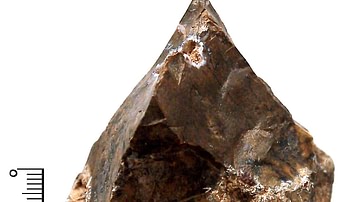
Oldowan Industry Chopper
Stone tool chopper belonging to the Oldowan tool industry (c. 2.6-1 million years ago). Oldowan tools overlap in terms of time with Homo habilis, Homo rudolfensis, and Homo erectus, as well as with later Australopithecines, and it is possible...
Image
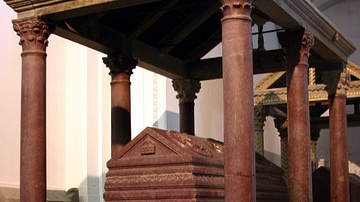
Tomb of Holy Roman Emperor Frederick II
Tomb of Holy Roman Emperor Frederick II (l. 1194-1250 CE) in Palermo, Sicily.

Image
Bernal Díaz del Castillo
A modern bust of the Spanish conquistador and chronicler Bernal Díaz del Castillo (1492 - c. 1580). Díaz wrote a famous account, The Conquest of New Spain. The bust is in the town of Medina del Campo in Spain, the birthplace of Díaz.

Image
Battle of Immae
Artist's impression of the Battle of Immae (272 CE), between Roman forces led by Emperor Aurelian (270-275 CE) and Palmyrene forces led by Queen Zenobia (r. 267-273 CE). The battle resulted in a Roman victory and the conquest of Antioch.
Image
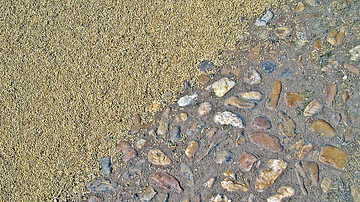
Flat Threshing Floor
A traditional flat threshing floor.
Image
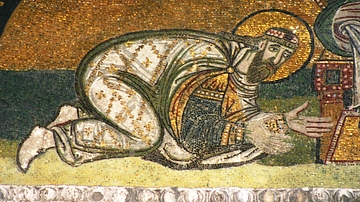
Leo VI
A penitent Leo VI, Byzantine emperor 886-912 CE, from a mosaic in the Hagia Sophia, Istanbul.

Article
The Pre-WWI Alliance System - Triple Entente v. Triple Alliance
The alliance system in Europe was one of the causes of the First World War (1914-18), although it did not make war inevitable. In the first decade of the 20th century, the Triple Entente powers of Great Britain, France, and Russia stood against...

Article
Battle of Waterloo
The Battle of Waterloo (18 June 1815) was the last major engagement of the Napoleonic Wars (1803-1815), fought by a French army under Emperor Napoleon I (r. 1804-1814; 1815) against two armies of the Seventh Coalition. Waterloo resulted in...

Article
The Jolly Roger & Other Pirate Flags
The Jolly Roger with its white skull and crossbones set against a black background has become a rather jovial part of pirate folklore but, in its day, this flag and others with similar blood-curdling designs, had a single and terrifying purpose...
