
Search
Remove Ads
Advertisement
Search Results

Definition
Alexandria, Egypt
Alexandria is a port city on the Mediterranean Sea in northern Egypt founded in 331 BCE by Alexander the Great. It was the site of the Pharos (lighthouse), one of the seven wonders of the ancient world, and the legendary Library...
Definition
Hamaxia
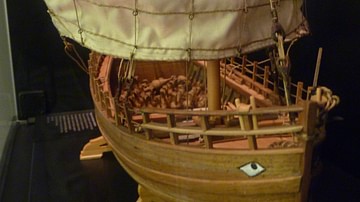
Hamaxia (now known as Sinek Kalesi or Sinekkalesi, near the modern Alanya) was a city in western Cilicia in southern Turkey known for its lush landscape, cedar forests, and thriving timber export business. It was located on a high hill...

Image
Bakhtan Stela
This stela shows two symmetrical scenes. On the left, we see a priest offers incense to a barque carrying a statue of "Khonsou-Spellcaster-of-Thebes-and-Chaser-of-Demons". On the right, Ramesses II presents incense to a similar...

Image
Fragment of a Wall Decoration from the Tomb of Seti I
This polychrome hieroglyphic inscription includes parts of the "Litany of the Eyes of Horus". The hieroglyphic signs were painted with vibrant colors and carved in raised relief on a white background...

Article
Spiritual Defense - Execration Rituals in Ancient Egypt
Magic was an integral aspect of life in ancient Egypt. The world was created through the power of heka (magic) as Atum stood on the primordial mound of the ben-ben in the middle of the endless waters...
Definition
Pazuzu - The Mesopotamian Demon of Destruction and Protection
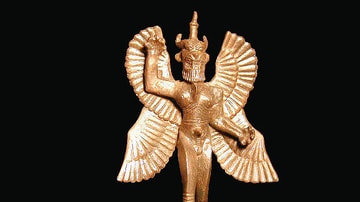
Pazuzu is a Babylonian/Assyrian demon who was most popular in the first millennium BCE. He was the son of Hanbi (also Hanba), king of the demons of the underworld, and brother of Humbaba, the...

Definition
Temple
A temple (from the Latin templum) is a structure usually built for the purpose of, and always dedicated to, religious or spiritual activities including prayer, meditation, sacrifice and worship. The templum was a sacred precinct defined...

Definition
Book of the Heavenly Cow
The Book of the Heavenly Cow is an ancient Egyptian text dealing with the rebellion of humanity against the sun god Ra, his destruction of the rebels through the goddess Hathor, the reversal of this decision and Ra's mercy...

Article
Family Planning in the Ancient Near East
The ancient Near East was home to a multitude of civilizations, across Egypt, Mesopotamia, and the Levant, each with unique views on medicine, conception, and women’s role in society. Attitudes towards contraception...

Article
Mesopotamian Effects on Israel During the Iron Age
The Iron Age in the traditional Ancient Near Eastern chronology ranges from somewhere around 1200 BCE to 333 BCE. It begins from the era when it was first thought iron came to be used up to the ascendency...
