
Search
Did you mean: Uruk?
Remove Ads
Advertisement
Search Results

Article
Sports, Games & Entertainment in the Elizabethan Era
Leisure activities in the Elizabethan era (1558-1603 CE) became more varied than in any previous period of English history and more professional with what might be called the first genuine entertainment industry providing the public with...

Article
Religion in Ancient China
Religious practices in ancient China go back over 7,000 years. Long before the philosophical and spiritual teachings of Confucius and Lao-Tzu developed or before the teachings of the Buddha came to China, the people worshipped personifications...

Article
Women in the Mongol Empire
Women in the Mongol Empire (1206-1368 CE) shared the daily chores and hardships of steppe life with men and were largely responsible for tending animals, setting up camps, childrearing, producing food and cooking it. Having rather more rights...
Article
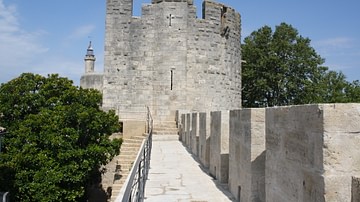
An Illustrated Glossary of Castle Architecture
Alure (Wall Walk) The walkway along the higher and interior part of a wall which often gives access to the higher floors of towers within the wall. Typically protected by battlements. Apse A semicircular projecting part of a building...

Article
Trial and Execution of Louis XVI
The trial and execution of King Louis XVI of France (r. 1774-1792) was one of the most impactful events of the French Revolution (1789-99). In December 1792, the former king, now referred to as Citizen Louis Capet, was tried and found guilty...

Article
Agriculture in the British Industrial Revolution
Agriculture, like most other areas of working life, was greatly affected by the machines invented during the Industrial Revolution. Agriculture in Britain and elsewhere had made leaps forward in the 18th century, and its success released...

Article
A Visual Glossary of Classical Architecture
Abacus - a large slab placed above the column capital to support the architrave or an arch placed above it. Akroterion - a decorative piece added to the roof of a temple at the apex and corners, usually made of clay or bronze and often in...

Article
Food & Drink in the Mongol Empire
The diet of the Mongols was greatly influenced by their nomadic way of life with dairy products and meat from their herds of sheep, goats, oxen, camels, and yaks dominating. Fruit, vegetables, herbs, and wild game were added thanks to foraging...
Article
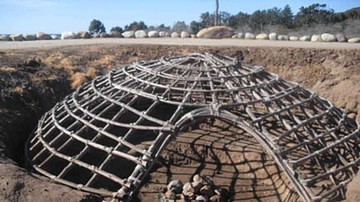
Origin of the Sweat Lodge
The sweat lodge is a temporary or permanent structure integral to Native American culture and frequently used in spiritual ceremonies. The lodge is often a low, dome-shaped, structure heated by hot rocks which produce steam as water is poured...

Article
Olaudah Equiano's Account of the Middle Passage
Olaudah Equiano (l. c. 1745-1797, also known as Gustavus Vassa) was an African of the Igbo village of Essaka, of the Kingdom of Benin (modern Nigeria), who was enslaved around the age of ten, bought his freedom around the age of 20, and became...
