
Search
Did you mean: Decius?
Search Results

Definition
Mystery Cults
Mystery cults, or mystery religions, were ancient religious associations characterized by secrecy and initiation rites. They typically surrounded one primary deity, but some mystery cults venerated multiple deities in their rites. Members...

Definition
Nanshe
Nanshe (also known as Nanse, Nazi) is the Sumerian goddess of social justice and divination, whose popularity eventually transcended her original boundaries of southern Mesopotamia toward all points throughout the region in the 3rd millennium...

Article
Twelve Gods of Persian Mythology
Ancient Persian Mythology is the term now referencing ancient Iranian religion prior to the rise of Zoroastrianism between c. 1500-1000 BCE. This was a polytheistic faith with a pantheon led by the supreme god Ahura Mazda (“Lord of Wisdom”...

Article
Ten Norse Mythology Facts You Need to Know
The stories that make up what is known today as Norse mythology once informed the religious beliefs of the people of regions including Scandinavia and Iceland. To the Norse, the world was an enchanted place of gods, spirits, and other entities...

Article
The Ancient Celtic Pantheon
The ancient Celtic pantheon consisted of over 400 gods and goddesses who represented everything from rivers to warfare. With perhaps the exception of Lugh, the Celtic gods were not universally worshipped across Iron Age Europe but were very...

Article
Cultural Links between India & the Greco-Roman World
Cyrus the Great (558-530 BCE) built the first universal empire, stretching from Greece to the Indus River. This was the famous Achaemenid Empire of Persia. An inscription at Naqsh-i-Rustam, the tomb of his able successor Darius I (521-486...
Article
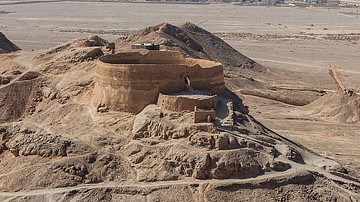
Death and the Afterlife in Ancient Persia
A vision of the afterlife is articulated by every culture, ancient or modern, in an effort to answer the question of what happens after death. Ancient Persia had the same interest in this as any culture of the past or in the present day and...

Article
Chola Art & Architecture
Like many great civilisations, the origins of the Chola, a Tamil Hindu dynasty in southern India, are shrouded in the temporal mists of uncertainty and obscurity. It is however known that they were influential from at least the 3rd century...

Article
Inanna and Ebih - A Poetic Narrative on Feminine Power
Inanna and Ebih is a Sumerian/Akkadian poem attributed to Enheduanna (circa 2300 BCE), daughter of Sargon of Akkad. The work's original title is Inninmehusa ("Goddess of the Fearsome Powers") and tells the story of the goddess Inanna's victory...

Article
Hymn to Nisaba
The Hymn to Nisaba (c. 3rd millennium BCE) is a poem praising Nisaba, the Sumerian goddess of writing and accounts who also served as scribe of the gods. The poem is officially dedicated to Enki, the god of wisdom (sometimes given as her...
