
Search
Did you mean: Decius?
Search Results

Definition
Assur
Assur (also Ashur, Anshar) is the god of the Assyrians who was elevated from a local deity of the city of Ashur to the supreme god of the Assyrian pantheon. His attributes were drawn from earlier Sumerian and Babylonian deities and so he...

Definition
Nisaba
Nisaba (also Naga, Se-Naga, Nissaba, Nidaba, and associated with Nanibgal) is the Sumerian goddess of writing, accounts, and scribe of the gods. Although her name is commonly given as Nidaba, noted scholar Jeremy Black points out that "the...

Definition
Gula
Gula (also known as Ninkarrak) is the Sumerian goddess of healing and patroness of doctors, healing arts, and medical practices. She is first attested to in the Ur III Period (2047-1750 BCE) where she is referenced as a great goddess of health...

Definition
Frigg
Frigg is a fertility goddess in Norse mythology. She is the wife of Odin, king of the gods, and is the greatest goddess of the Norse pantheon. She is thought to have developed, along with the goddess Freyja, from an earlier fertility deity...

Article
Religion in Ancient China
Religious practices in ancient China go back over 7,000 years. Long before the philosophical and spiritual teachings of Confucius and Lao-Tzu developed or before the teachings of the Buddha came to China, the people worshipped personifications...

Article
Ten Legendary Female Viking Warriors
In 2017 CE, Uppsala University archaeologist Charlotte Hedenstierna-Jonson published her study of a Viking grave discovered in Birka, Sweden in the 1800's CE which she and her team had revisited. She claimed that what was formerly understood...
Article
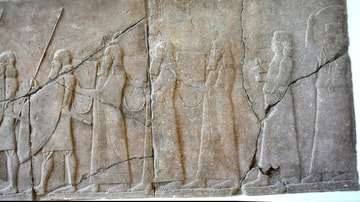
Festivals in Ancient Mesopotamia - Courting the Goodwill of the Gods
Festivals in ancient Mesopotamia honored the patron deity of a city-state or the primary god of the city that controlled a region or empire. The earliest, the Akitu festival, was first observed in Sumer in the Early Dynastic period (circa...

Article
Ships of the Gods of Ancient Egypt
The Nile River was the source of life for the ancient Egyptians and so figured prominently in their religious beliefs. At night, the Milky Way was considered a heavenly Nile, associated with Hathor, and provider of all good things. The Nile...

Article
Family Planning in the Ancient Near East
The ancient Near East was home to a multitude of civilizations, across Egypt, Mesopotamia, and the Levant, each with unique views on medicine, conception, and women’s role in society. Attitudes towards contraception and abortion varied according...

Definition
Baal
Baal (also given as Ba'al) is a Canaanite-Phoenician god of fertility and weather, specifically rainstorms. The name was also used as a title, however, meaning "Lord" and was applied to a number of different deities throughout the ancient...
