
Search
Did you mean: Elam?
Remove Ads
Advertisement
Search Results

Article
Discovery of Troy
In his epic poems, the Iliad and the Odyssey, the Greek poet Homer (c. 750 BCE) told the story of the Trojan War, a ten-year siege of the city of Troy by an alliance of Greek city-states. Troy was also known by its Latinised...
Article
Childhood in Ancient Rome
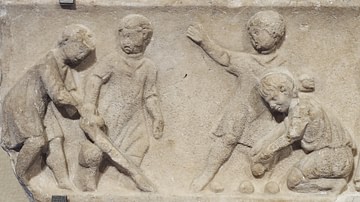
Freeborn Roman children, ingenuiae, born of Roman citizen parents lived a life that was dictated by the level of society into which they were born; a day in the life of a child from the lower level of society and one from...

Article
Medicine in Ancient Mesopotamia - A Gift of the Gods to Their People
In ancient Mesopotamia, the gods informed every aspect of daily life, including the practice of medicine. Gula, the Sumerian goddess of healing, presided over the medical arts, guiding...

Article
Death's Mansions: The Columbaria of Imperial Rome
A columbarium is an underground chamber, which the Romans used for preserving the ashes of the dead. During the 1st and 2nd centuries CE, hundreds of columbaria lined the consular highways leading out...

Article
Egyptian Gods - The Complete List
The gods and goddesses of Ancient Egypt were an integral part of the people's everyday lives for over 3,000 years. There were over 2,000 deities in the Egyptian pantheon, many whose names are well known - Isis, Osiris...

Article
The Gold Crowns of Silla
The Silla Kingdom ruled south-eastern Korea during the Three Kingdoms period (1st century BCE - 7th century CE) and then, as the Unified Silla Kingdom, all of Korea from 668 to 935 CE. The Silla produced fine pieces of...
Article
The Tales of Prince Setna
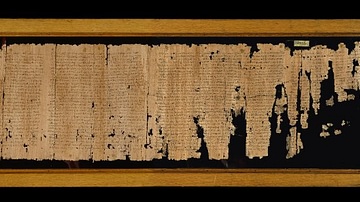
Among the most engaging and influential works from Egyptian literature are the stories in the cycle known as Setna I and Setna II or The Tales of Prince Setna. These are fictional works from the Late Period of Ancient...

Article
Ancient Greek Inventions
The ancient Greeks are often credited with building the foundations upon which all western cultures are built, and this impressive accolade stems from their innovative contributions to a wide range of human activities...

Article
On the Pallava Trail in Kanchipuram
The Pallavas ruled south-eastern India from the 3rd through the 9th centuries CE. Their empire covered what is today the Tamil Nadu state. Their origin is shrouded in mystery though historians believe their roots...
Article
Martial Arts in Medieval Japan
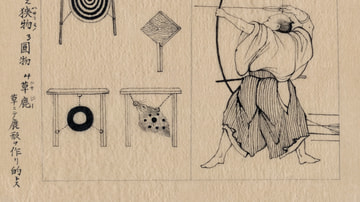
There were 18 martial arts (bugei or bujutsu) in medieval Japan, and these included use of weapons, unarmed self-defence techniques, swimming, and equestrian skills. Initially designed to hone the skills of warriors...
