
Search
Remove Ads
Advertisement
Search Results

Definition
Urbanization
Urbanization is the process by which rural communities grow to form cities, or urban centers, and, by extension, the growth and expansion of those cities. Urbanization began in ancient Mesopotamia in the Uruk Period (4300-3100 BCE) for reasons...

Definition
Camillus
Marcus Furius Camillus (c. 445/446-365 BCE) was the first great general of the Roman Republic to also prove himself an able administrator and honorable politician. He was chosen as dictator five times, celebrated four triumphs, and was hailed...

Definition
Thebes (Greece)
Thebes is a town in central Greece which has been continuously inhabited for five millennia. It was an important Mycenaean centre in the middle to late Bronze Age and was a powerful city-state in the Classical period, participating in both...

Definition
Troy
Troy is the name of the Bronze Age city attacked in the Trojan War, a popular story in the mythology of ancient Greece, and the name given to the archaeological site in the north-west of Asia Minor (now Turkey) which has revealed a large...

Image Gallery
A Gallery of the City of Babylon
The city of Babylon was once the most famous cultural and religious center of the ancient world and, in fact, was understood as the center of the world according to an ancient map. It did not acquire its reputation as a “city of sin” until...

Article
12 Great Cities of Ancient Mesopotamia - The Rise and Fall of the Earliest Cities in the World
The great cities of Mesopotamia ("the land between two rivers") developed prior to the late 4th millennium BCE along two rivers – the Tigris and Euphrates – and were fully established by the Early Dynastic period (circa 2900 to circa 2350/2334...
Image
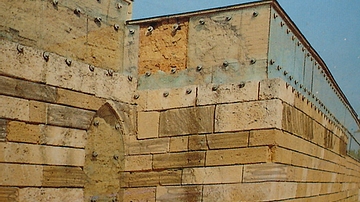
Timoleon Walls, Gela
The walls are the most important monument that has come to us from Hellenistic Gela, preserved in a truly extraordinary way thanks to the sudden cover-up of the area. They are located at the western end of the modern city, in the locality...
Image
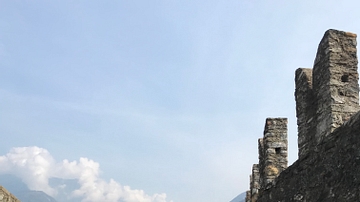
Murata Walls of Castelgrande in Bellinzona
Bellinzona flourished as a city under the rule of the Visconti and Sforza dynasties in the Late Middle Ages, who secured the Alpine passes, upheld customs laws, and balanced state finances and ordinances. The Milanese also rebuilt the Murata...
Image
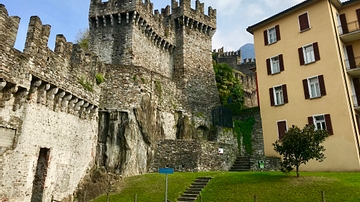
Southern Defensive Walls in Bellinzona
This is a view of the southern city walls in the Swiss city of Bellinzona. These walls and defensive structures lead up to the Montebello Castle. These structures were constructed initially by the Milanese in the 15th century CE.

Definition
Nineveh - The Great Cultural Center That Became the "City of Sin"
Nineveh (modern-day Mosul, Iraq) was one of the oldest and greatest cities in antiquity. It was originally known as Ninua, a trade center, and would become one of the largest and most affluent cities in antiquity. It was regarded highly by...
