
Search
Remove Ads
Advertisement
Search Results
Image
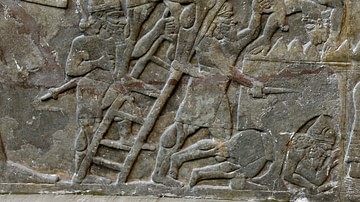
Assyrian Army Besieges a City
Alabaster bas-relief depicting an attack on a city by the Assyrian army. Detail of Panel 5 (bottom), Room B, the North-Palace Palace, Nimrud, modern-day Iraq, Neo-Assyrian Empire, 865-860 BCE. The British Museum, London...
Image
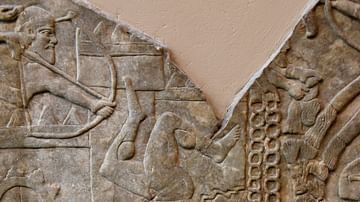
Assyrian Soldiers Attacking a City
Alabaster bas-relief depicting an overwhelming Assyrian attack on a city. Neo-Assyrian Period, 865-860 BCE. Detail of Panel 5 (bottom), Room B, the North-Palace Palace, Nimrud, modern-day Iraq. (The British Museum...
Image
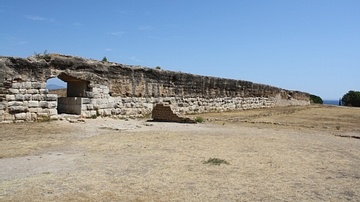
City Wall, Empuries
A section of the Roman city-wall of Empuries (Emporiae), Spain. 1st century BCE. The base of the wall was made using calcareous rock while the upper portion is of Roman concrete (opus caementicium).

Image
Ramparts of a Medieval City in A Plague Tale: Innocence
Amicia de Rune standing in front of the ramparts of a Medieval city in the video game A Plague Tale: Innocence.

Image
City Wall of Stone & Opus Caementicium, Roman Empuries (Detail)
A section of the Roman city-wall of Empuries, Spain. 1st century BCE. The base of the wall was made using calcareous rock while the upper portion is of Roman concrete (opus caementicium).

Image
Conquest of the City of Luchiuni
The cuneiform inscription on this rock narrates the conquest of the city of Luchiuni at Transcaucasia by King Menua. Menua was the 5th king of Urartu. c. 810 to c. 785/80 BCE. From Cholakert/Vorgebirge of Ararat (of...
Image
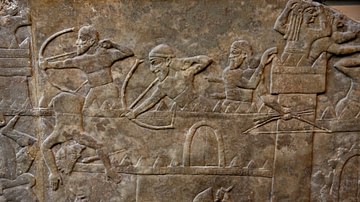
Assyrian Army Assaulting a City
Alabaster bas-relief showing a massive and progressive Assyrian assault on a city. Neo-Assyrian Period, 865-860 BCE. Detail of Panel 4 (bottom), Room B, the North-Palace Palace, Nimrud, modern-day Iraq. (The British...
Image
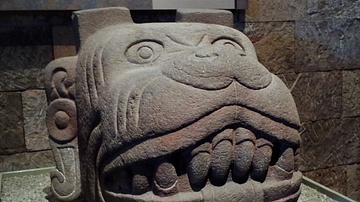
Sculpture of Xolotl, Mexico City
Head of the Aztec god Xolotl. Collection of National Anthropological Museum, Mexico City.

Article
Siege Warfare in Ancient India
Forts and sieges held a key position in ancient Indian warfare. Built on considerations of strategic location, topography, and the natural advantages provided by the site, forts would be heavily supplemented with man-made...

Definition
Byzantine Empire
The Byzantine Empire existed from 330 to 1453. It is often called the Eastern Roman Empire or simply Byzantium. The Byzantine capital was founded at Constantinople by Constantine I (r. 306-337). The Byzantine Empire varied in...
