
Search
Remove Ads
Advertisement
Search Results
Image
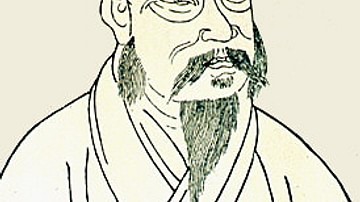
Liu Bang (Emperor Gaozu)
A portrait of Liu Bang who became the Chinese emperor Gao of the Han (Gaozu). Victor in the famous battle of Gaixia in 202 BCE, he founded the Han dynasty which would rule China from 202 BCE to 220 CE.

Video
An Introduction to the Dynasties of Ancient China
Ancient China produced what has become the oldest extant culture in the world, and this video is just an introduction to the different dynasties and rulers of Ancient China all the way up until the Song...

Definition
Queen Anne's War - When Europe's Succession Dispute Ignited American Frontiers
Queen Anne’s War (1702-1713) was the second major colonial conflict in North America, fought between the colonies of England – Great Britain after 1707 – and those of France and...

Definition
Roxanne
After Alexander the Great's victory over King Darius III at the Battle of Gaugamela in 331 BCE, he had to contend with small rebellions that broke out across his empire. In the summer of 328 BCE, one such rebellion occurred in the eastern...

Definition
Hypaspist
The hypaspists or hypaspistai were a distinct type of infantry soldier who served as a vital part of the Macedonian armies of both Phillip II of Macedon (r. 359 BCE - 336 BCE) and his son and heir Alexander the Great (r. 336-323 BCE...

Definition
Anastasios I
Anastasios I ruled the Byzantine empire from 491 to 518 CE. Although his tax and monetary reforms were both popular and successful, the emperor could not repair the damaging split in the Christian Church created by his predecessors...

Article
Jade in Ancient China
Jade (nephrite) was regarded as the most precious stone in ancient China, and it symbolised purity and moral integrity. Prized for its durability and magical qualities, the stone was laboriously carved and polished into all...

Article
Armour in Ancient Chinese Warfare
With zinging arrows, powerful crossbow bolts, stabbing swords, and swinging axes all a staple feature of the Chinese battlefield, it is not surprising that soldiers sought to protect themselves as best they could...

Article
Fortifications in Ancient Chinese Warfare
While ancient Chinese warfare was often characterised by large armies in pitched battles, siege warfare and the sacking of cities were also regular features. Huge earth walls with towers and encircling ditches...

Article
Chinese Lacquerware
Lacquer was a popular form of decoration and protective covering in ancient China. It was used to colour and beautify screens, furniture, bowls, cups, sculpture, musical instruments, and coffins, where it could be carved, incised...
