
Search
Remove Ads
Advertisement
Search Results
Definition
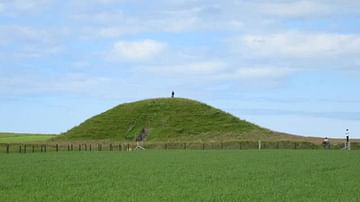
Maeshowe - The Ancient Meadow Mound of Orkney
Maeshowe (pronounced `maze-ow' or `maze-oo') is a large Neolithic chambered cairn, dating from between 3000-2800 BCE, in the Stenness parish of Orkney, Scotland. According to Dr. Berit Sandnes, of Lund University...
Definition
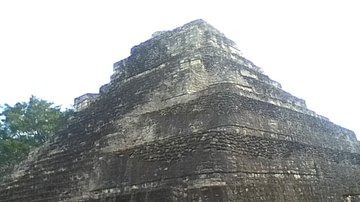
Chacchoben
Chacchoben (pronounced chac-CHO-bin) is a Maya site dated to c. 700 located in the state of Quintana Roo, Mexico. Once a large and significant urban religious center, the city was abandoned c. 900-950 CE at about the same time as...
Definition
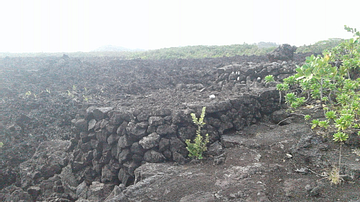
Kukii Heiau
Located at the easternmost point of the Hawaiian Islands, Cape Kumukahi holds a special place in ancient Hawaiian mythology as this was where the gods and goddesses first arrived in the islands from Tahiti. It was here that the fire...

Article
Olmec Colossal Stone Heads
The stone head sculptures of the Olmec civilization of the Gulf Coast of Mexico (1200 BCE - 400 BCE) are amongst the most mysterious and debated artefacts from the ancient world. The most agreed upon theory is that, because...
Article
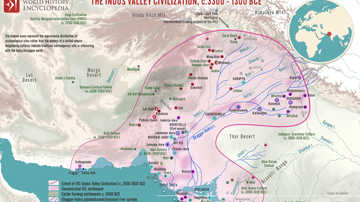
Religious Developments in Ancient India
For well over 1,000 years, sacred stories and heroic epics have made up the mythology of Hinduism. Nothing in these complex yet colourful legends is fixed and firm. Pulsing with creation, destruction, love...
Article
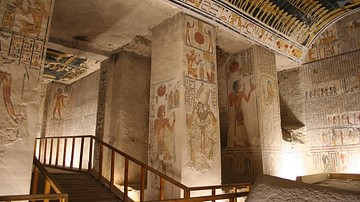
Tomb Robbing in Ancient Egypt
The tombs of the great kings and nobles of Egypt were built to safeguard the corpse and possessions of the deceased for eternity and yet, while many have endured for thousands of years, their contents often disappeared...
Article
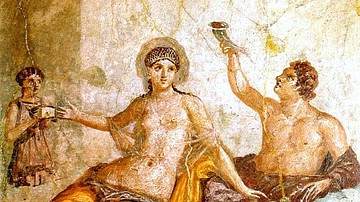
The Eastern Trade Network of Ancient Rome
The life of wealthy Romans was filled with exotic luxuries such as cinnamon, myrrh, pepper, or silk acquired through long-distance international trade. Goods from the Far East arrived in Rome through two corridors...

Article
The Olive in the Ancient Mediterranean
Olives and olive oil were not only an important component of the ancient Mediterranean diet but also one of the most successful industries in antiquity. Cultivation of the olive spread with Phoenician and Greek...

Article
Jade in Ancient China
Jade (nephrite) was regarded as the most precious stone in ancient China, and it symbolised purity and moral integrity. Prized for its durability and magical qualities, the stone was laboriously carved and polished into all...

Article
Minoan Jewellery
The jewellery of the Minoan civilization based on Bronze Age Crete demonstrates, as with other Minoan visual art forms, not only a sophisticated technological knowledge (in this case of metalwork) and an ingenuity of design but...
