
Search
Remove Ads
Advertisement
Search Results
Image
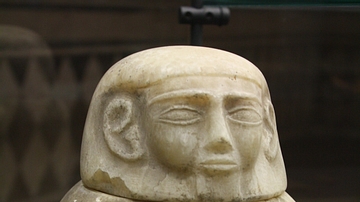
Canopic Jar, Saqqara
A calcite canopic jar from Saqqara, Egypt. XXVI Dynasty. (Archaeological Museum, Pavia, Italy)
Image
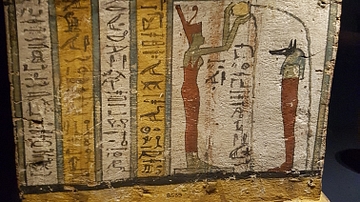
Canopic Box Of Nesaarud
Canopic Box Of Nesaarud. 25th-early 26th Dynasties. (680-600 BCE). Probably from Thebes, Egypt. From the Middle Kingdom onwards (about 2040-1650 BCE), canopic jars were sometimes stored in boxes. Here, the Sons of Horus...
Image
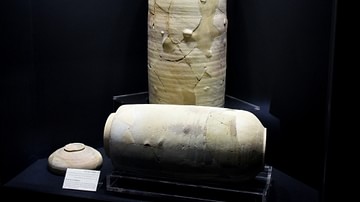
Dead Sea Scrolls Jars
Dead Sea Scrolls jars from Qumran (Khirbet Qumran or Wadi Qumran), West Bank of the Jordan River, near the north part of the Dead Sea, modern-day State of Israel. The Dead Sea Scrolls, or Qumran Caves Scrolls, are parchment...

Image
Wine Jars Of Nedjmet
Egyptian wine jars, 18th-19th Dynasties, about 1550-1186 BCE. Provenance unknown. The British Museum, (photo taken at The Powerhouse Museum, Sydney, Australia) Originally part of a set of at least four jars, these two...
Image
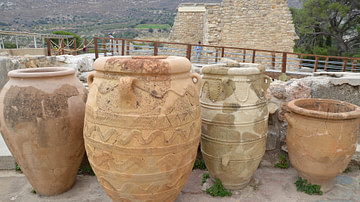
Minoan Storage Jars at the Palace of Knossos
These are four of the 150 giant pithoi (storage jars) found in the West Magazines (storage rooms) of the Palace of Knossos. The jars once held oil and wine and dry materials such as grain. The capacity of...

Image
Etruscan Canopic Figure Urn
Etruscan terracotta canopic urn with a female head and articulated arms, from Chiusi (Italy), around 550-500 BCE. (Louvre Lens, France)
Image
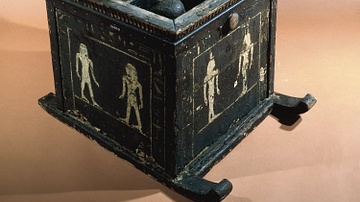
Canopic Chest
Canopic chest of Neby (dating from 18th Dynasty, found in Thebes, Egypt). The painted sides bear hieroglyphic text and representations of Neith, Serket, Isis, Nephthys, and Sons of Horus.
Image
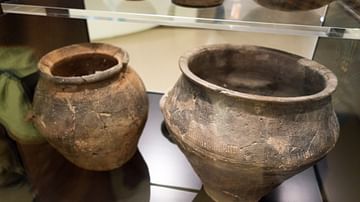
Norse-Viking Storage Jars
Viking storage jars
Royal Ontario Museum, Toronto, Canada, 2017
Image
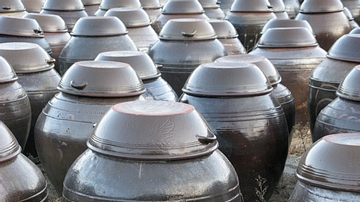
Korean Onggi Jars
Korean onggi lidded-jars, made since ancient times they are used for a multitude of purposes and carry simple decoration.

Image
2013 image of labelled wine jars in first Tel Kabri wine cellar towards the southeast
An image of the wine pithos at Tel Kabri's Area D-West in situ during the 2013 excavation. The pithos were excavated out after the photo and this storage room is now covered...
