
Search
Remove Ads
Advertisement
Search Results

Definition
Mictlantecuhtli
Mictlantecuhtli (pron. Mict-lan-te-cuht-li) or 'Lord of the Land of the Dead' was the Aztec god of death. He ruled the underworld (Mictlán) with his wife Mictecacíhuatl. Mictlantecuhtli was worshipped and feared across Mesoamerica...

Article
The Changing Interpretation of the Spanish Conquest in the Americas
The fall in 1519 of Tenochtitlan, the capital of the Mexica or Aztec Empire, as it was later called, laid the foundation for the Spanish colonial empire on the North American mainland...

Video
Moctezuma: Aztec Ruler, an exhibition at the British Museum
An introduction to the last Aztec ruler, Moctezuma II. Promoting a exhibition at the British Museum, exploring Aztec (Mexica) civilisation through the divine, military and political role of the...

Image
Aztec victims of smallpox
Sixteenth-century Aztec drawings of victims of smallpox. Scanned from (2009) Viruses, Plagues, and History: Past, Present and Future, Oxford University Press, USA, p. 60.

Image
Aztec Warriors
Aztec warriors in typical costume of elite ranks with back racks displaying group insignia. They each carry an obsidian-bladed spear. From the Codex Mendoza, folio 67. (Bodleian Library, Oxford)

Image
Aztec Sun Stone, 1792 Illustration
Aztec Sun Stone, illustration in Antonio León y Gama's Historical and Chronological Description of the Two Stones Which Were Found in 1790 During the Repaving of the Main Plaza in Mexico, 1792. Antonio León y...
Image
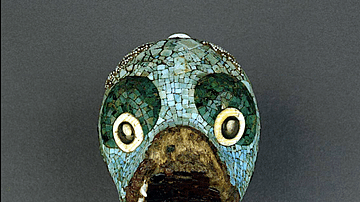
Aztec Turquoise Pendant
An Aztec pendant representing an animal head and covered in turquoise mosaic and with eyes rendered in shell and pyrite. 1400-1521, Mexico. Height 10 cm. (British Museum, London)
Image
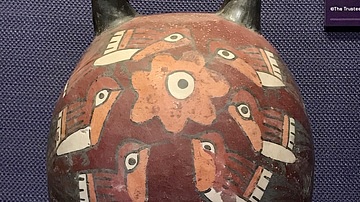
Aztec Hummingbird Whistling Pot
The Aztec civilization of ancient Mesoamerica believed that dead warriors were reincarnated as hummingbirds or butterflies. These whistling pots often included such birds, and they were considered spiritual conduits...
Image
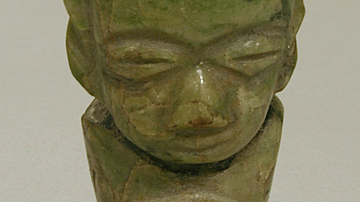
Aztec Jade Pendant
An Aztec jade pendant in the form of a figurine. 15th century. (Metropolitan Museum of Art, New York)

Definition
State of Nature
The state of nature is an idea which became especially popular with certain philosophers during the Enlightenment, notably Thomas Hobbes (1588-1679), John Locke (1632-1704), and Jean-Jacques Rousseau (1712-1778). It refers to...
