
Search
Remove Ads
Advertisement
Search Results

Video
What Montezuma's Aztec Sounded Like - and how we know
The Aztecs didn't call him Montezuma. Nor Moctezuma. They didn't call chocolate "chocolate". Heck, they didn't even call themselves Aztec! Though they were an oral culture, we have an idea of what...

Article
The Changing Interpretation of the Spanish Conquest in the Americas
The fall in 1519 of Tenochtitlan, the capital of the Mexica or Aztec Empire, as it was later called, laid the foundation for the Spanish colonial empire on the North American mainland...

Definition
Pedro de Alvarado
Pedro de Alvarado (c. 1485-1541) was a Spanish conquistador who became the first governor of Guatemala in 1527. Living an extraordinary life of adventure, Alvarado participated in separate expeditions to Mexico, Central America...

Video
The Norse Pantheon: Crash Course World Mythology #10
This week, we're headed north. To check out the gods of the Northmen. Or the Norse. That's right, we're talking Thor, Loki, Freyr, Freya, Odin, Frigg, Baldr, and Tyr. And Fenrir. And the Frost Giants...

Video
The Aztec Myth of the Unlikeliest Sun God
Discover the myth of how the weak and pimply Aztec god Nanahuatl sacrificed himself to become Lord Sun and created a new world. — Nanahuatl, weakest of the Aztec gods, sickly and covered in pimples, had...

Definition
Xochipilli
Xochipilli or the 'Prince of Flowers' was the Mesoamerican god of summer, flowers, pleasure, love, dancing, painting, feasting, creativity and souls. He is a benevolent manifestation of Piltzintecuhtli, the young sun god who was himself...
Definition
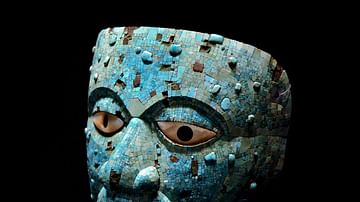
Xiuhtecuhtli - The Aztec God of Fire
Xiuhtecuhtli or 'Turquoise Lord' was the Aztec god of fire and also closely associated with young warriors and rulers. To the Maya he was known as Chac Xiutei. Xiuhtecuhtli was the patron of the day Atl (water...

Definition
Toltec Civilization
The Toltec civilization flourished in ancient central Mexico between the 10th and mid-12th centuries. Continuing the Mesoamerican heritage left to them by earlier cultures, the Toltecs built an impressive capital at Tollan...
Article
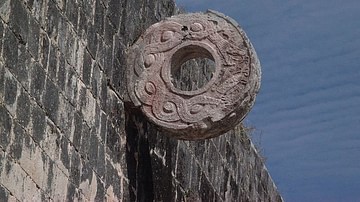
The Ball Game of Mesoamerica
The sport known simply as the Ball Game was played by all the major Mesoamerican civilizations and the impressive stone courts became a feature of many cities. More than just a game, it could have a religious significance...

Definition
Ghosts in the Ancient World - The Return of the So-Called Dead
A belief in an afterlife was central to every major civilization of the ancient world and this encouraged the recognition of the reality of ghosts as the spirits of the departed who, for one...
