
Search
Remove Ads
Advertisement
Search Results

Image
Aztec Sun Stone, 1792 Illustration
Aztec Sun Stone, illustration in Antonio León y Gama's Historical and Chronological Description of the Two Stones Which Were Found in 1790 During the Repaving of the Main Plaza in Mexico, 1792. Antonio León y...
Image
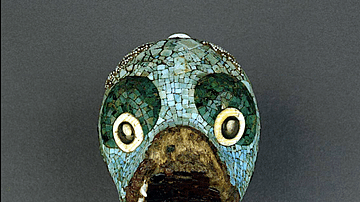
Aztec Turquoise Pendant
An Aztec pendant representing an animal head and covered in turquoise mosaic and with eyes rendered in shell and pyrite. 1400-1521, Mexico. Height 10 cm. (British Museum, London)
Image
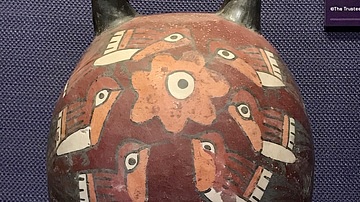
Aztec Hummingbird Whistling Pot
The Aztec civilization of ancient Mesoamerica believed that dead warriors were reincarnated as hummingbirds or butterflies. These whistling pots often included such birds, and they were considered spiritual conduits...
Image
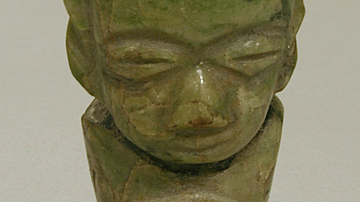
Aztec Jade Pendant
An Aztec jade pendant in the form of a figurine. 15th century. (Metropolitan Museum of Art, New York)

Video
Moctezuma: Aztec Ruler, an exhibition at the British Museum
An introduction to the last Aztec ruler, Moctezuma II. Promoting a exhibition at the British Museum, exploring Aztec (Mexica) civilisation through the divine, military and political role of the...

Video
Aztec and Mayan Are Totally Different Languages. Sort of
Ancient Mexico was a hotbed of language mixing. Aztecs and Maya spoke completely unrelated languages, but a Mesoamerican linguistic mindmeld tied them together in surprising ways. Here's the grammar...

Video
What Montezuma's Aztec Sounded Like - and how we know
The Aztecs didn't call him Montezuma. Nor Moctezuma. They didn't call chocolate "chocolate". Heck, they didn't even call themselves Aztec! Though they were an oral culture, we have an idea of what...

Definition
Pedro de Alvarado
Pedro de Alvarado (c. 1485-1541) was a Spanish conquistador who became the first governor of Guatemala in 1527. Living an extraordinary life of adventure, Alvarado participated in separate expeditions to Mexico, Central America...

Article
The Changing Interpretation of the Spanish Conquest in the Americas
The fall in 1519 of Tenochtitlan, the capital of the Mexica or Aztec Empire, as it was later called, laid the foundation for the Spanish colonial empire on the North American mainland...

Video
The Aztec Myth of the Unlikeliest Sun God
Discover the myth of how the weak and pimply Aztec god Nanahuatl sacrificed himself to become Lord Sun and created a new world. — Nanahuatl, weakest of the Aztec gods, sickly and covered in pimples, had...
