
Search
Remove Ads
Advertisement
Search Results

Definition
Meiji Period
The Meiji period refers to the period in Japanese history from 1868 to 1912 during which the Meiji Emperor reigned. Following the overthrow of the Tokugawa shogunate in the Meiji Restoration of 1868, Japan's new leaders embarked...

Definition
Romani Language
Romani is an Indo-European language, belonging to the Indic subbranch which includes Sanskrit and Hindi. Because of the Romani diaspora throughout Europe and West Asia, it developed in close contact with European and Iranian languages...
Definition
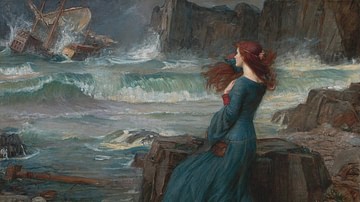
The Tempest - Shakespeare's Magical Tragicomedy
The Tempest is a play by William Shakespeare (c. 1564-1616), written in 1610 or 1611, and first performed for the court of James I of England (r. 1603-1625) on 2 November 1611. Believed to be the last play...

Definition
Susa
Susa was one of the oldest cities in the world and part of the site is still inhabited as Shush, Khuzestan Province, Iran. Excavations have uncovered evidence of continual habitation dating back to 4395 BCE but that early community grew...

Definition
Nile
The world's longest river, located in Egypt, the Nile flows 4,132 miles (6,650 kilometres) northward to the Mediterranean Sea (a very unusual direction for a river to take). It was considered the source of life by the ancient Egyptians...

Definition
Civilization - From Nomadic Life to the Farm and City
Civilization (from the Latin civis=citizen and civitas=city) is a term applied to any society which has developed a writing system, government, production of surplus food, division of labor, and urbanization...

Definition
Ancient Egyptian Culture
Ancient Egyptian culture flourished between c. 6000 BCE with the rise of technology (as evidenced in the glasswork of faience) and 30 BCE with the death of Cleopatra VII, the last Ptolemaic ruler of Egypt. It is famous...

Definition
Horus
Horus is the name of a sky god in ancient Egyptian mythology which designates primarily two deities: Horus the Elder (or Horus the Great), the last born of the first five original gods, and Horus the Younger, the son of Osiris and Isis...
Definition
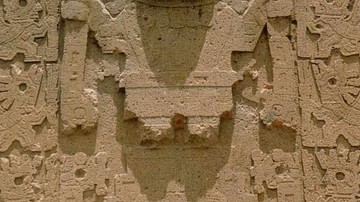
Viracocha
Viracocha was the supreme god of the Incas. He is also known as Huiracocha, Wiraqoca and Wiro Qocha. Considered the creator god he was the father of all other Inca gods and it was he who formed the earth, heavens, sun, moon and all...

Definition
Selinus
Selinus (or Selinous, modern: Selinunte), located on the south-west coast of Sicily, was founded in the mid-7th century BCE by Greek colonists from Megara Hyblaea on the eastern side of the island. Selinus was the most western Greek...
