
Search
Did you mean: Athena?
Remove Ads
Advertisement
Search Results

Definition
Labyrinth
The word labyrinth comes from the Greek labyrinthos and describes any maze-like structure with a single path through it which differentiates it from an actual maze which may have multiple paths intricately linked. Etymologically the...

Definition
Muse
In Greek mythology, the nine Muses are goddesses of the various arts such as music, dance, and poetry. Blessed with wonderful artistic talents, they also possess great beauty, grace, and allure. Their gifts of song, dance, and joy helped...

Definition
Agamemnon (Play)
The play Agamemnon was written by one of the greatest Greek tragedians Aeschylus (c. 525 – 455 BCE), “Father of Greek Tragedy.” Older than both Sophocles and Euripides, he was the most popular and influential of all tragedians...

Definition
Sounion
Sounion (or Sunium) was an important ancient Greek religious sanctuary sacred to the gods Poseidon and Athena. Spectacularly located on a promontory in southern Attica, the site is dominated by the temple of Poseidon perched on the cliff...
Definition
Polybius
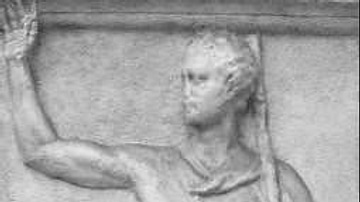
Polybius (l. c. 208-125 BCE) was, whilst a Greek historian, a Roman historian, in that his work dealt with explaining how Rome came to be so great. Like the three Classical Greek Historians, Polybius himself had personal experiences...

Definition
Pirates in the Ancient Mediterranean
Piracy, defined as the act of attacking and robbing a ship or port by sea, had a long history in the ancient Mediterranean stretching from the time of the Egyptian pharaoh Akhenaten (r. 1353-1336 BCE) and throughout...

Definition
Kos
Kos (Cos) is a Greek island in the south-east Aegean, part of the Dodecanese (ancient Sporades) group which prospered in antiquity due to its location on trade routes between Egypt, Syria, Cyprus, and Anatolia. Settled from the Bronze Age...

Definition
Hellenistic Warfare
When Alexander the Great died in 323 BCE, he left behind an empire devoid of leadership. Without a named successor or heir, the old commanders simply divided the kingdom among themselves. For the next three decades, they fought...

Definition
Philip II of Macedon
Although he is often only remembered for being the father of Alexander the Great, Philip II of Macedon (reigned 359 BCE - 336 BCE) was an accomplished king and military commander in his own right, setting the stage for his...

Definition
Greek Dark Age
The Greek Dark Age (c. 1200 to c. 800 BCE, overlapping with the Iron Age, c. 1200-550 BCE) is the modern-day term for the period in Greek history following the Bronze Age Collapse when the Mycenaean Civilization fell and the Linear...
