
Search
Remove Ads
Advertisement
Search Results
Image
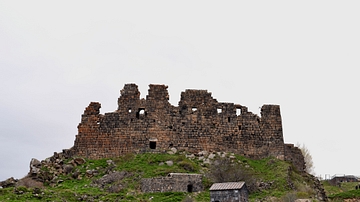
View of the Armenian Fortress Amberd
Before Amberd Fortress was constructed in the 7th century CE, Stone Age peoples, the Urartians, and even the Romans used and understood the location's strategic advantages, lying at the intersection of the Amberd...

Image
Medieval Armenian Architectural Element
This stone block contains a stylized design dating back to 13th or 14th-century Armenia. It is located within the Noravank Monastery, which is located in Armenia's Vayots Dzor Province.

Image
Armenian Jewish Tombstones in Yeghegis
Nearly 40 tombstones from the 13th and 14th century CE survive in the Jewish cemetery, and another 30 are located nearby in Yeghegis, Armenia. The oldest tombstone dates to 1266 CE and the latest to 1337 CE...
Image
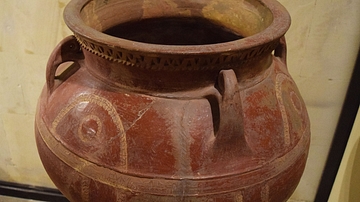
Armenian-Byzantine Vessel
This elegant clay patterned vessel dates from the 10-11th century CE when what's present-day Armenia was under strong Byzantine political and cultural influence. (Metsamor Historical-Archaeological Museum-Reserve, Taronik...

Image
Fragments of Armenian Plates
These clay fragments are decorated with glaze and date from the 13th century BCE. They were excavated in what is present-day Armenia. (Metsamor Historical-Archaeological Museum-Reserve, Taronik, Armenia)
Image
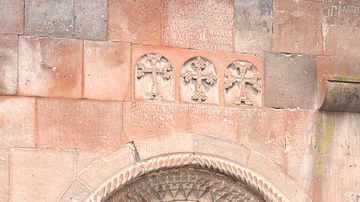
Entrance to the Armenian Khor Virap Monastery
Entrance to the Khor Virap Monastery, which is located near the border with Turkey some 8 km (5 mi) from the town of Artashat, Armenia. It is one of the most visited and sacred sites in Armenia.

Image
Armenian Stone Weapons Mould
Ancient stone mold, used for making weapons in ancient times in what is present-day Armenia, dating from the 12th-10th century BCE.
Metsamor Historical-Archaeological Museum-Reserve, Taronik.

Image
Prehistoric Armenian Ritual Ware
This elegant ritual ware vessel is made of clay and dates from the 12th-9th century BCE. It was excavated in what is present-day Armenia. (Metsamor Historical-Archaeological Museum-Reserve, Taronik, Armenia)
Image
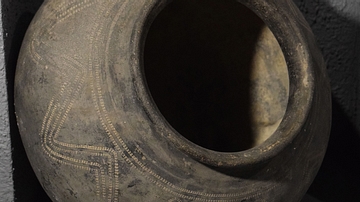
Armenian Patterned Clay Vessel
This ancient clay vessel was made in what is present-day Armenia. It dates from the 18th-16th century BCE. (Metsamor Historical-Archaeological Museum-Reserve, Taronik, Armenia)

Image
Armenian Gravestones at Zorats Church
Surrounding the Zorats Church in what's present-day Armenia are a number of exquisitely carved khachkars dating to the 10th-13th centuries CE and tombstones dating from the 15-17th centuries CE.
