
Search
Did you mean: Nemea?
Remove Ads
Advertisement

 This answer was generated by
 Search Results

Definition
Freya Stark
Freya Stark (l. 1893-1993) was an English explorer, writer, and political influencer who chronicled world events, especially in the Near East, throughout the 20th century. Stark both reported on and made the news as her travels, described...

Definition
Kingdom of Axum
The African kingdom of Axum (also Aksum) was located on the northern edge of the highland zone of the Red Sea coast, just above the horn of Africa. It was founded in the 1st century CE, flourished from the 3rd to 6th century CE...

Definition
Kingdom of Saba
Saba (also given as Sheba) was a kingdom in southern Arabia (region of modern-day Yemen) which flourished between the 8th century BCE and 275 CE when it was conquered by the neighboring Himyarites. Although these are the most...

Definition
Arabia
The ancient Arabians, or Arabes as they were called by the Hellenes, were a Semitic people. One must note that the Arabians were not a single people but multiple smaller kingdoms and tribes. Arabia was home to great city builders and...

Article
Italian Colonialism in Eritrea
Eritrea, located on the Red Sea coast of the Horn of Africa, was the ‘firstborn’ colony of Italy. The potential of a trade centre and naval base at Assab first attracted Italian interests in 1869. The Kingdom of Italy...

Definition
Islam
Islam is an Abrahamic-monotheistic religion based upon the teachings of Prophet Muhammad ibn Abdullah (l. 570-632 CE, after whose name Muslims traditionally add “peace be upon him” or, in writing, PBUH). Alongside Christianity and Judaism...

Definition
Kingdom of Nabatea
The Nabatean Kingdom was a powerful political entity which flourished in the region of modern-day Jordan between the 4th century BCE and c. 106 CE and is best known today for the ruins of its capital city of Petra. Although...

Article
Origins of World Agriculture
Agriculture arose independently at several locations across the world, beginning about 12,000 years ago. The first crops and livestock were domesticated in six rather diffuse areas including the Near East, China, Southeast...

Article
Saladin & the Unification of the Muslim Front: 1169-1187 CE
Saladin (c. 1137 – 1193 CE), the Muslim ruler who crushed the mighty Crusader army at the Horns of Hattin (1187 CE) and re-took Jerusalem after 88 years of Crusader control, was born in a world...
Interview
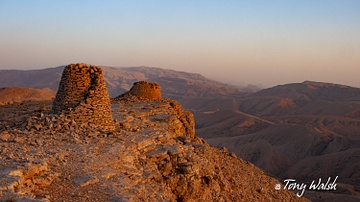
Oman: The Land of Frankincense - Tony Walsh
While Oman is perhaps the most mysterious corner of the Arabian peninsula to Westerners, the country retains a strong sense of identity, a pride in its ancient past, and unique surprises in the domain of...
