
Search
Remove Ads
Advertisement
Search Results

Definition
Gaiseric
Gaiseric (r. 428-478 CE, also known as Genseric and Geiseric) was the greatest king of the Vandals who remained undefeated from the time he took the throne until his death. He was probably born in 389 CE near Lake Balaton (present-day...

Definition
Isabella of France
Isabella of France (c. 1292-1358) was the queen consort of Edward II of England (r. 1307-1327). After heading a coup to overthrow her husband, she ruled as regent for their young son, Edward III of England (r. 1327-1377) until...

Definition
British Crown Jewels
The Crown Jewels of the monarchy of the United Kingdom of Great Britain and Northern Ireland are today kept in the Tower of London and date mostly to the 17th century, with a few later sparkling additions such as the Koh-i-Noor...

Definition
Richard, Duke of York
Richard, 3rd Duke of York (l. 1411-1460 CE) was the richest man in England and one of the nobles who sparked off the Wars of the Roses (1455-1487 CE), a dynastic dispute that rumbled on for four decades between several English...

Definition
Hellenistic Warfare
When Alexander the Great died in 323 BCE, he left behind an empire devoid of leadership. Without a named successor or heir, the old commanders simply divided the kingdom among themselves. For the next three decades, they fought...
Article
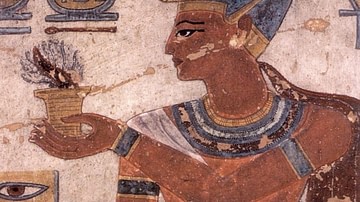
The First Labor Strike in History
The most important cultural value in ancient Egypt was harmony; known to the Egyptians as ma'at. Ma'at was the concept of universal, communal, and personal balance which allowed for the world to function as it should...

Article
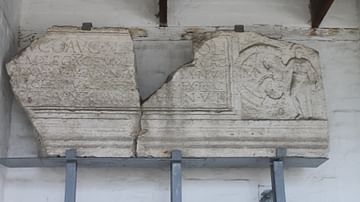
Legions of Spain, Roman Africa & Egypt
The legions of Spain, Roman Africa, and Egypt did not see the intensity of action that prevailed elsewhere in Europe. However, the presence of these four legions - VII Gemina, IX Hispana, XXII Deiotariana, and...
Article
Legions of Syria
The Roman legions of Syria served as a buffer, protecting the Roman Empire not only externally from such threats as Parthia and the Sasanian Empire but also internally during the Great Jewish Revolt of 66 CE and the Bar-Kochba...

Definition
Stone of Scone
The Stone of Scone (Gaelic: Lia Fail), also known as the Stone of Destiny or Coronation Stone, is a block of sandstone associated with the coronation ceremonies of the medieval monarchs of Scotland. These ceremonies were held at...

Definition
Constantinople
Built in the seventh century BCE, the ancient city of Byzantium proved to be a valuable city for both the Greeks and Romans. Because it lay on the European side of the Strait of Bosporus, the Emperor Constantine understood its...
