
Search
Did you mean: Goryeo?
Remove Ads
Advertisement
Search Results
Image
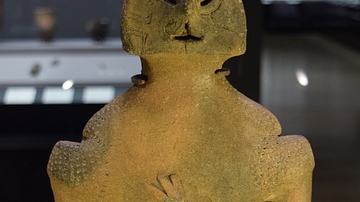
Dogu Figurine, Jomon Period
A clay dogu figurine. From Kamikurokoma, Fuefuki-shi, Yamanashi, Japan. Jomon Period, 3000-2000 BCE. (Tokyo National Museum)
Image
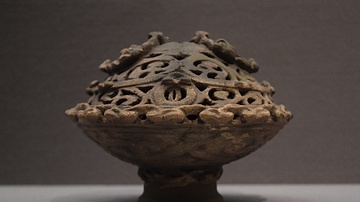
Jomon Incense Burner
A Jomon incense burner. Rokugo Ishinadate, Misato-cho, Akita, Japan. Jomon Period, 1000-400 BCE. (Tokyo National Museum)

Image
Obsidian used for Prehistoric Japanese Tools
This piece of obsidian dates from the Paleolithic period or c. 18000 BCE, and it was uncovered in Engarau-cho on Japan's Hokkaido island. It helped prehistoric Japanese people in making stone tools. (Tokyo...

Image
Shinto Priest and Female Shrine Stewards at Meiji Shrine
In this picture, one sees a male Shinto priest accompanied by two female shrine stewards (or "miko" in Japanese) at the Meiji Shrine in Tokyo, Japan as they prepare to oversee a wedding ceremony...
Image
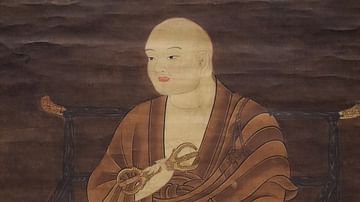
Kukai Silk Portrait
A painted silk portrait of Kukai or Kobo Daishi (774-835 CE) who was a scholar, poet, and monk who founded Shingon Buddhism in Japan. 14th century CE. (Tokyo National Museum)

Image
Jomon Clay Mask
A Jomon clay mask or domen. Kidukuri, Kamegaoka, Tsugaru-shi, Aomori, Japan. Jomon Period, 1000-400 BCE. Important Cultural Property. (Tokyo National Museum)

Image
Le Moulin de Blute-Fin by van Gogh
An 1886 oil on canvas painting, Le Moulin de Blute-Fin, by Vincent van Gogh (1853-90), the Dutch post-impressionist artist. Painted in Paris while van Gogh shared an apartment with his brother Theo. The artist made...
Image
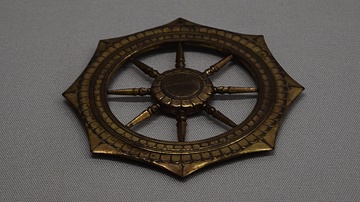
Japanese Dharma Wheel
A gilt bronze dharma wheel used in Buddhist rituals. 13th century CE. (Tokyo National Museum)
Image
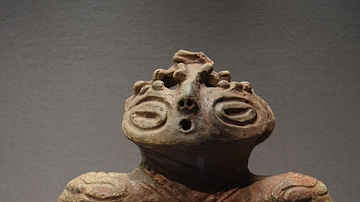
Jomon Stone Figurine
A Jomon stone figurine or gangu. Komukai, Nanbu-cho, Aomori, Japan. Jomon Period, 1000-400 BCE. (Tokyo National Musuem)
Image
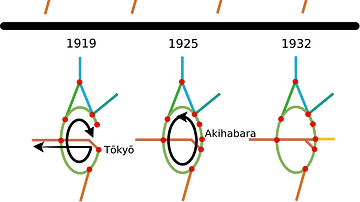
The Construction of the Yamanote Line
The Yamanote Line is a loop rail line that runs around the central part of Tokyo. This map shows how the line developed over time.
