
Search
Remove Ads
Advertisement
Search Results
Definition
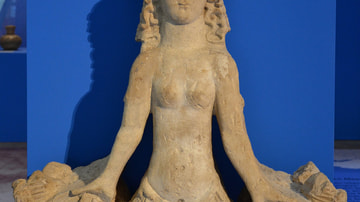
Scythian Religion
Scythian religion appears to be an amalgam of belief in a pantheon of gods grafted to more ancient animal reverence and shamanistic practice. According to their burial finds, the Scythians appear to have had a deep affinity with...

Article
Sacred Sites & Rituals in the Ancient Celtic Religion
In the religion of the ancient Celts who lived in Iron Age Europe from 700 BCE to 400 CE, certain natural sites like springs, river sources, and groves were held as sacred. These places, as well as...

Definition
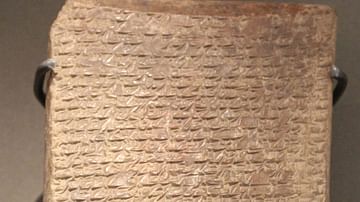
Eridu Genesis - The Oldest Mesopotamian Text on the Great Flood
The Eridu Genesis (also known as the Sumerian Flood Story, The Flood Story, Sumerian creation myth, Sumerian deluge myth) is the oldest Mesopotamian text relating the tale of the Great Flood...
Article
Ludlul-Bel-Nemeqi
The Ludlul-Bel-Nemeqi (c. 1700 BCE) is a Sumerian and later Babylonian poem on the theme of unjust suffering, which is thought to have influenced the biblical Book of Job. Also known as The Poem of the Righteous Sufferer, the...

Article
Maya Religion: The Light That Came From Beside The Sea
The Mayan religious text, the Popol Vuh (known by many names, among them, The Light That Came From Beside The Sea) is the Quiche Maya story of creation translated into Spanish in the early 18th century...

Definition
Mesopotamian Government - Helping and Serving the Gods
Ancient Mesopotamian government was based on the understanding that human beings were created to help and serve the gods. The high priest, king, assembly of elders, governors, and any other officials...

Article
Religion & Superstition in Colonial America
Religion and superstition went hand in hand in Colonial America, and one’s belief in the first confirmed the validity of the second. The colonists' worldview was completely informed by religion and so everything...

Article
Another Ariamanus Statue Found: The Evil Spirit of Mithraic Religion
It is rare when a new find creates renewed interest in an old subject. Here, the new find is a leontocephaline (lion-headed) figure of unknown provenance, weighing 5.8 kg and 37 cm in...

Article
Religion in the Middle Ages
Religion in the Middle Ages, though dominated by the Catholic Church, was far more varied than only orthodox Christianity. In the Early Middle Ages (c. 476-1000), long-established pagan beliefs and practices entwined...

Article
Religion in the Mongol Empire
The Mongol Empire (1206-1368 CE) covered Asia from the Black Sea to the Korean peninsula and so naturally included all manner of religions within its borders, but the Mongols themselves had their own particular religious...
