
Search
Did you mean: Armenian Mythology?
Remove Ads
Advertisement
Search Results

Definition
The Graces
The Graces (also Charites, sing. Charis) were goddesses from Greek mythology who personified charm, grace, and beauty. Hesiod describes three Graces, and this is their most common grouping in literature and art, but their number varies...

Definition
Neith
Neith (aka Net, Neit or Nit) and is one of the oldest deities of ancient Egypt who was worshipped early in the Pre-Dynastic Period (c. 6000 - 3150 BCE) and whose veneration continued through the Ptolemaic Dynasty (323 - 30 BCE), the last...

Definition
Tyche
In Greek mythology, Tyche is the goddess and personification of good luck, chance, and fortune. Tyche's popularity grew after the Classical period when many cities and officials across the Greek world and the Mediterranean adopted her...

Definition
Ahura Mazda
Ahura Mazda (also known as Ahuramazda, Harzoo, Hormazd, Hourmazd, Hurmuz, Ohrmazd, 'Lord' or 'Spirit') is the highest spirit worshipped in Zoroastrianism, the old Mede and ancient Persian mythology which spread across Asia predating...

Definition
Phaedra
Phaedra is a princess of Crete and the wife of the Greek hero Theseus in Greek mythology. She is one of the main characters in Euripides' (c. 484-407 BCE) Greek tragedy Hippolytus, which recounts how her love for Thesesus' son Hippolytus...

Definition
Vidar
Vidar is a figure in Norse mythology, described as the silent god and almost as mighty as Thor. He will survive Ragnarök, the unavoidable and dramatic end of the world according to the prophecy that chief-god Odin extracts from a seeress...

Video
The Myth of Echo and Narcissus
Narcissus is a figure from Greek mythology who was so impossibly handsome that he fell in love with his own image reflected in a pool of water. Even the lovely nymph Echo could not manage to tempt him from his self-absorption...
Article
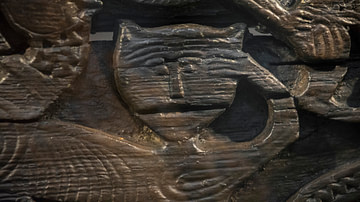
Norse Pets in the Viking Age
Pets were as important to the Norse of the Viking Age (c. 790-1100 CE) as they were to any other culture, past or present. The Vikings kept dogs and cats as pets and both feature in Norse religious iconography and literature...

Article
The Life of Hercules in Myth & Legend
Hercules is the Roman name for the Greek hero Herakles, the most popular figure from ancient Greek mythology. Hercules was the son of Zeus, king of the gods, and the mortal woman Alcmene. Zeus, who was always...

Article
The Ancient Celtic Pantheon
The ancient Celtic pantheon consisted of over 400 gods and goddesses who represented everything from rivers to warfare. With perhaps the exception of Lugh, the Celtic gods were not universally worshipped across Iron Age...
