
Search
Remove Ads
Advertisement
Search Results

Article
Why Did Hitler Hate Jewish People?
The leader of Nazi Germany Adolf Hitler (1889-1945) identified Jewish people as enemies of the state, presenting them through relentless propaganda as responsible for Germany's economic and cultural decline. Basing this propaganda on White...

Article
The Causes of WWI
The origins of the First World War (1914-18) are many and varied, with some even dating back several decades, but a political assassination in the Balkans in the summer of 1914 was the spark that blew up Europe's political powder keg, that...
Article
The Pre-WWI Alliance System - Triple Entente v. Triple Alliance
The alliance system in Europe was one of the causes of the First World War (1914-18), although it did not make war inevitable. In the first decade of the 20th century, the Triple Entente powers of Great Britain, France, and Russia stood against...

Article
How Did Hitler Rise to Power?
The rise of Adolf Hitler (1889-1945), the Nazi dictator of Germany from 1933, was enabled by those already in power eager to take advantage of his popularity. Hitler promised to make Germany great again after the humiliation of WWI by restoring...

Article
Six Great Heresies of the Middle Ages
The medieval Church established its monopoly over the spiritual life of Europeans in the Early Middle Ages (c. 476-1000) and consolidated that power throughout the High Middle Ages (1000-1300) and Late Middle Ages (1300-1500). Along the way...
Article
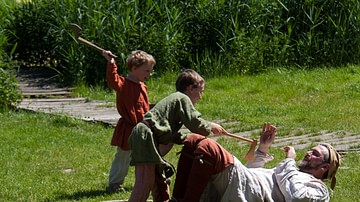
Childhood in the Viking Age
Childhood in the Viking Age (c. 750-1100) was largely undocumented as historical records primarily focus on adults, particularly men. Likewise, little is known about children's presence in the afterlife, as no runestones were raised in their...
Article
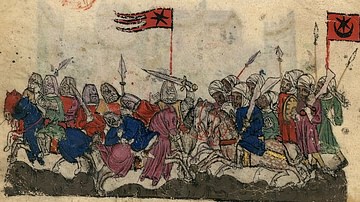
Battle of Yarmouk
The Battle of Yarmouk River (or Yarmuk River; also written as the Battle of Jabiya-Yarmuk) was fought over the course of six days, from 15 to 20 August 636 CE, between the Muslim army of the Rashidun Caliphate (632-661 CE), under Khalid ibn...

Article
The Meanings of Mjölnir - Thor's Hammer & More
One of the most famous objects in Norse mythology, Mjölnir was the hammer wielded by Thor, god of storms and thunder, and was his most potent weapon in battles against the enemies of gods and humans. But Mjölnir represented more than severe...
Article
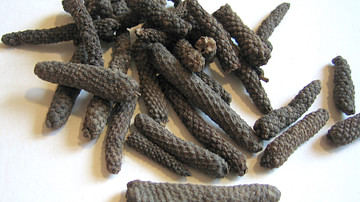
Middle Eastern Power Shifts & the Trade of Pepper from East to West
Pepper has long been the king of spices and for almost 2,000 years dominated world trade. Originating in India, it was known in Greece by the 4th century BCE and was an integral part of the Roman diet by 30 BCE. It remained a force in Europe...
Article
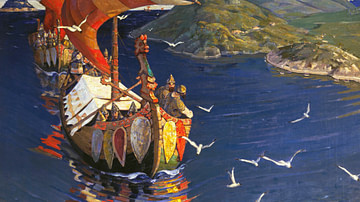
Trade & Warfare in the Kievan Rus
Scandinavians from the island of Gotland began to spread throughout the Baltic region along the Russian rivers in the 700s. While the Vikings of Norway and Denmark from the 8th to 11th centuries are widely recognized as fearsome raiders and...
