
Search
Did you mean: Inari?
Remove Ads
Advertisement
Search Results

Definition
God
God' is the common word for the identity of a higher being in the universe beyond our world, the creator of all known existence, and who rules in conjunction with lower gradients of divinity (angels). In Greek, theikos ("divine") meant...

Definition
Moses
Moses (c. 1400 BCE) is considered one of the most important religious leaders in world history. He is claimed by the religions of Judaism, Christianity, Islam, and Bahai as an important prophet of God and the founder of monotheistic belief...

Definition
Byzantine Architecture
The architecture of the Byzantine Empire (4th - 15th century CE) continued its early Roman traditions but architects also added new structures to their already formidable repertoire, notably improved fortification walls and...

Definition
Pharisees
The Pharisees were a Jewish sect that emerged c. 150 BCE and promoted the idea of priestly purity for all Jews, belief in providence or fate, and the concept of the resurrection of the dead, and taught that besides the commandments...
Definition
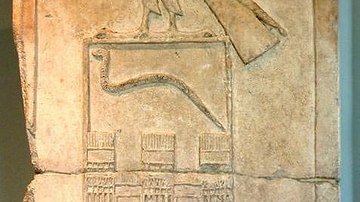
First Dynasty of Egypt
The kings of the First Dynasty of Egypt (c. 3150 - c. 2890 BCE) all worked toward the same ends: increasing trade, expansion of the kingdom through military campaigns, engaging in building projects (such as monuments, tombs...

Definition
Third Dynasty of Egypt
The Third Dynasty of Egypt (c. 2670-2613 BCE) begins with king Djoser, famous for his Step Pyramid at Saqqara. Although there are some sources which claim a king named Sanakht (also known as Nebra) founded the Third Dynasty...

Article
The Twelve Tribes of Israel
The Twelve Tribes of Israel refer to the sons of the Jewish Patriarch Jacob and are important for the tribal lineages of those who constituted the nation of Israel. In the ancient world, all ethnic groups developed stories...

Article
Angels in Ancient Judaism
The concept and function of angels in ancient Judaism were some of the many elements incorporated from contemporary cultures and religious views. The Hebrew malakh was translated into the Greek angelos, both of which indicated...

Article
Byzantine Monasticism
Monasticism, that is individuals devoting themselves to an ascetic life in a monastery for devotional purposes, was an ever-present feature of the Byzantine empire. Monasteries became powerful landowners and a voice to be...

Article
The Divinity of Jesus
In the decades of the 20s and 30s of the 1st century CE, a Jew from the town of Nazareth in the Galilee began preaching that the God of Israel would soon intervene in history, restoring that nation to God's original plan and...
